Bangladesh’s Azim Khan Ronnie wins International Aerial Photographer of the Year
Azim Khan Ronnie’s chilli-harvest aerial from Sariakandi helped him top a 1,587-entry field, where judges rewarded portfolios built on pattern, scale and clean post-processing.
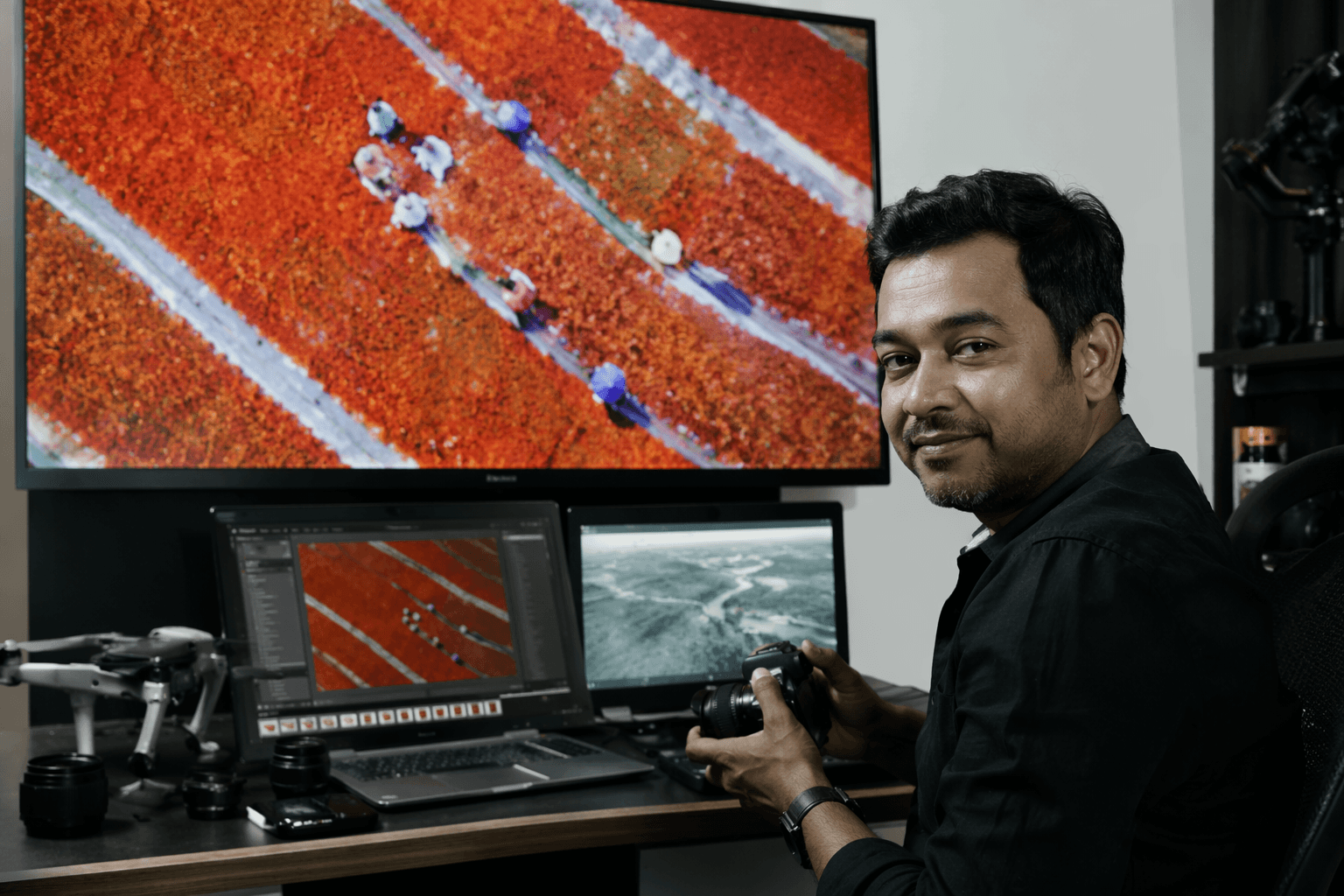
Azim Khan Ronnie of Bangladesh won the second International Aerial Photographer of the Year, a contest that drew 1,587 entries and whittled them down to 101 images under judges Tom Hegen, Isabella Tabacchi and Joanna Steidle. The sister competition to the International Landscape Photographer of the Year has quickly become a sharp read on where aerial photography is headed: less about simply going higher, more about finding a clear subject, a legible pattern and a finish that holds together from thumbnail to full screen.
The contest’s rules make that direction plain. Entries had to be made by a real person, AI-generated content was not permitted, and only minor AI retouching for noise reduction or healing was allowed. The Photographer of the Year title also rests on a folio of at least four images, which means Ronnie’s victory was about consistency as much as one standout frame. Chin Leong Teo of Singapore finished second overall, Barbara Brown of Australia took third, and Vitaly Golovatyuk of the Russian Federation won the single-image International Aerial Photograph of the Year.
Ronnie’s winning portfolio shows how much the best aerial work now depends on subject choice as much as flight skill. His frames included a rowing team on Lake Zurich, a mass of Siberian seagulls in Delhi, devotional scenes in Dhaka and a chilli-harvesting scene in Bangladesh. The chilli image, made in Sariakandi, Bogura, is especially revealing: more than 2,000 people work across almost 100 chilli farms there, and the picture turns that labor into an orderly red-and-green grid that reads instantly from above. That is the current sweet spot in aerial photography, where altitude is used to reveal structure rather than just distance.
Ronnie’s workflow fits that standard too. PetaPixel said he leans on the DJI Mavic 4 Pro and DJI Mavic 3 Classic for the aerial side of his work, shoots raw, and finishes everything in Adobe Photoshop with exposure and white balance changes, contrast and tonal corrections, colour refinement, sharpening, noise reduction and selective local adjustments. His public biography describes him as an 800-plus award-winning travel, aerial and documentary photographer based in France, while another profile says he was born in Dhaka and brought up in Bogura, Bangladesh, and has spent 11 years covering travel, aerial, news, culture, sports, humanitarian issues and everyday life.
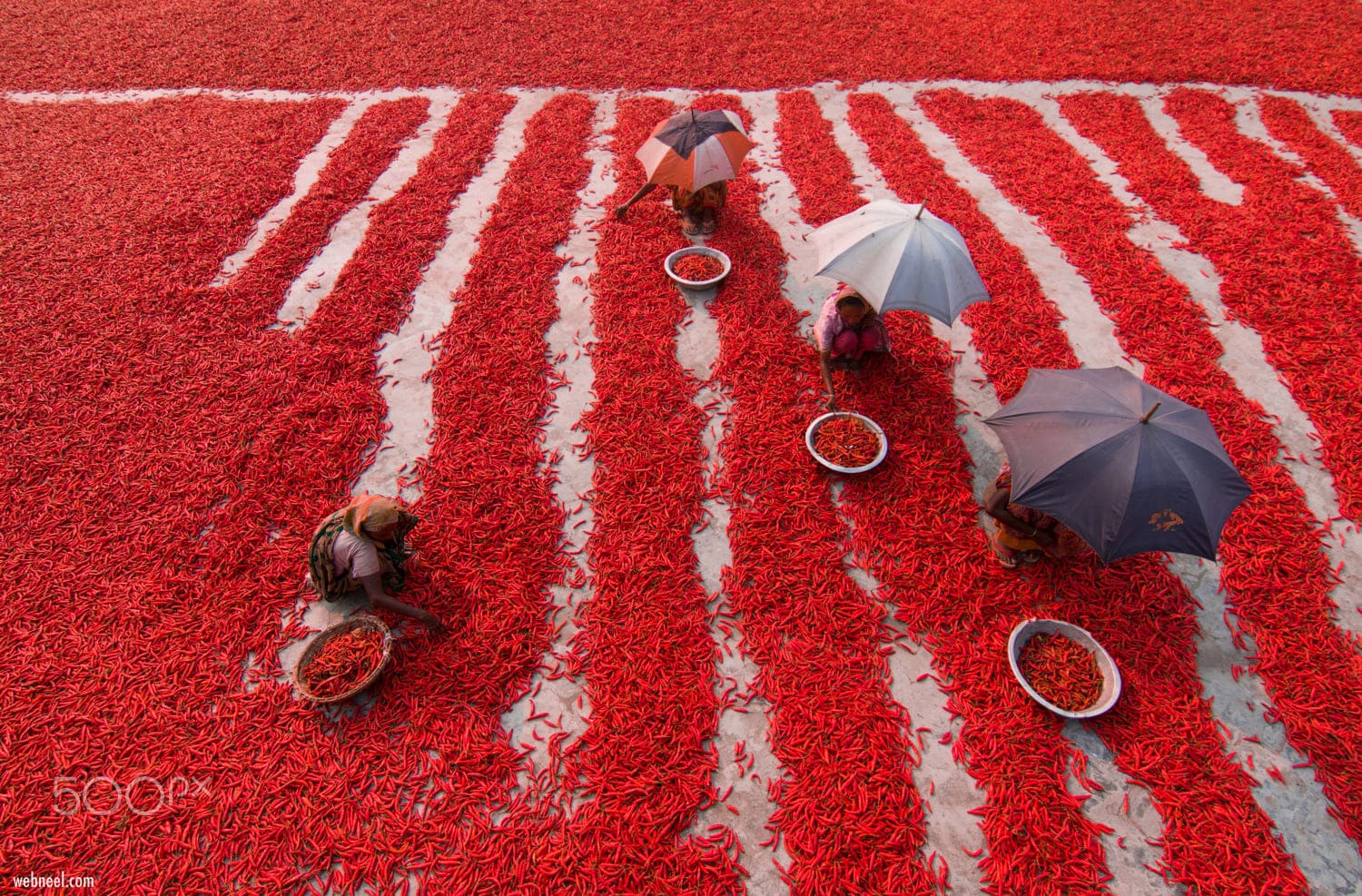
The contest has expanded fast. Its inaugural 2025 edition drew more than 1,500 entries and was won by Joanna Steidle of the United States, and the jump to 1,587 entries in year two suggests the field is settling into its own visual grammar. Ronnie’s win shows what now separates a high-altitude shot from a shareable aerial photograph: the frame has to read as a pattern, feel grounded in real places and survive the polish that comes after the flight.
Every story on Photography News is assembled by an automated editorial system that works from verified research, official records, and credible reporting, then clears automated accuracy and moderation checks before it goes live. The standards that system follows are set and overseen by the people who run the publication. Read our full editorial policy.
Did this article answer your question?