Tiny cameras strapped to pigeons are not going to make your drone look like a bird tomorrow, but they may help make future camera drones smarter where it counts: seeing, stabilizing and landing in messy real-world light. The University of British Columbia team published the work in Current Biology on July 6, 2026, and the appeal for photographers is immediate: better machine vision could mean cleaner autonomous framing, less jitter in flight, and fewer bad decisions when a drone is trying to hold a shot in wind, clutter or weak GPS.
Why this pigeon setup matters to drone shooters
The basic idea is biomimicry, but not the vague, buzzword version. The researchers are using a bird that already handles crowded airspace, quick orientation changes and homeward navigation to understand what vision looks like in motion, then asking what a drone might borrow from that. For anyone who flies a camera drone, the practical upside is easy to imagine:
- tighter obstacle avoidance in trees, alleyways and other tight spaces
- steadier flight paths when the aircraft has to think and move at the same time
- more reliable autonomous tracking and framing in visually busy scenes
- better landing behavior when the scene is too chaotic for simple sensor tricks
- camera-driven navigation that does more when GPS is weak or unavailable
That does not mean a consumer drone will suddenly copy pigeon behavior overnight. It does mean the research points toward vision systems that are less dependent on one brittle sensor and more willing to read the scene the way a living flyer does.
How the bird-mounted rig worked
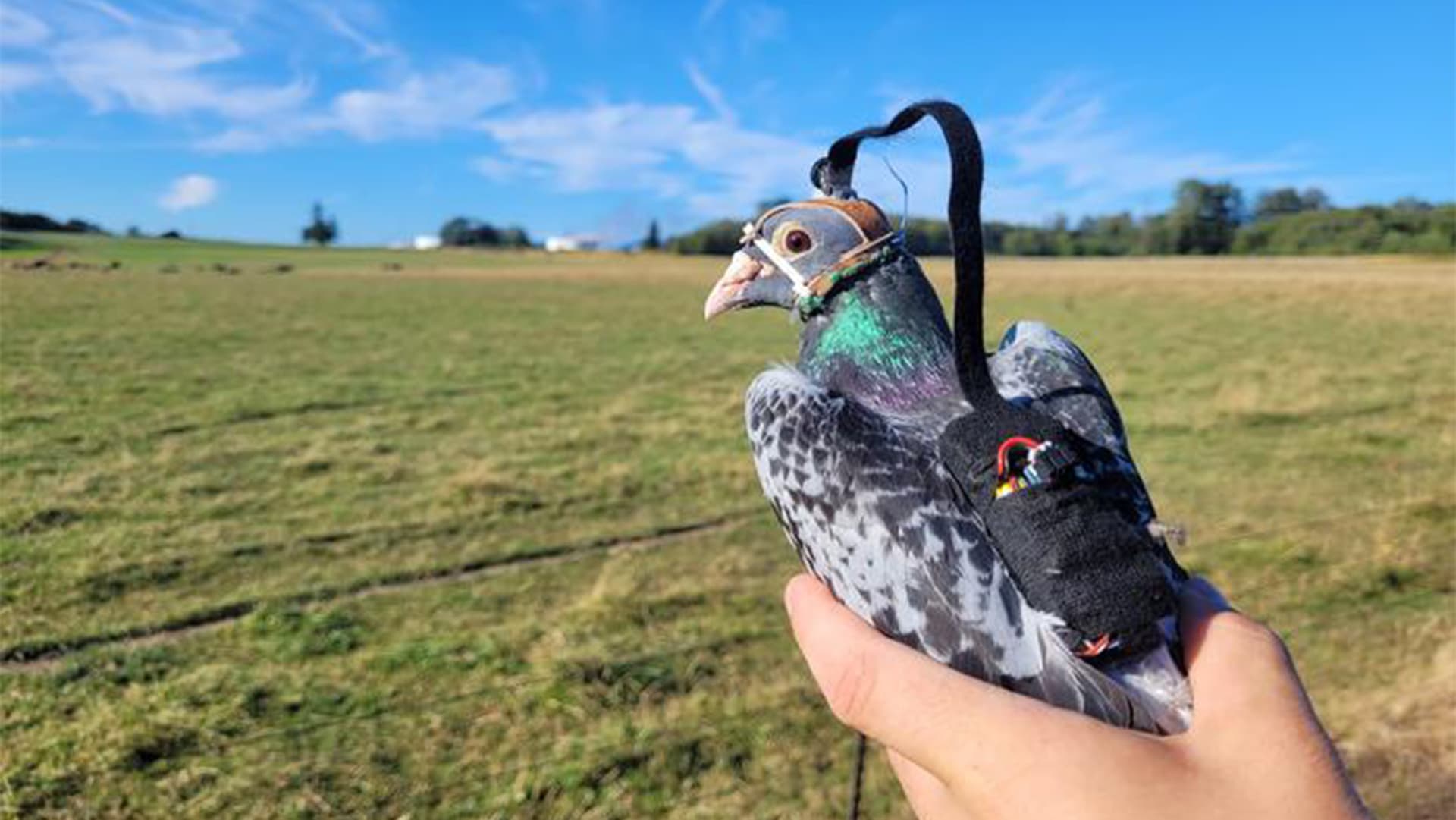
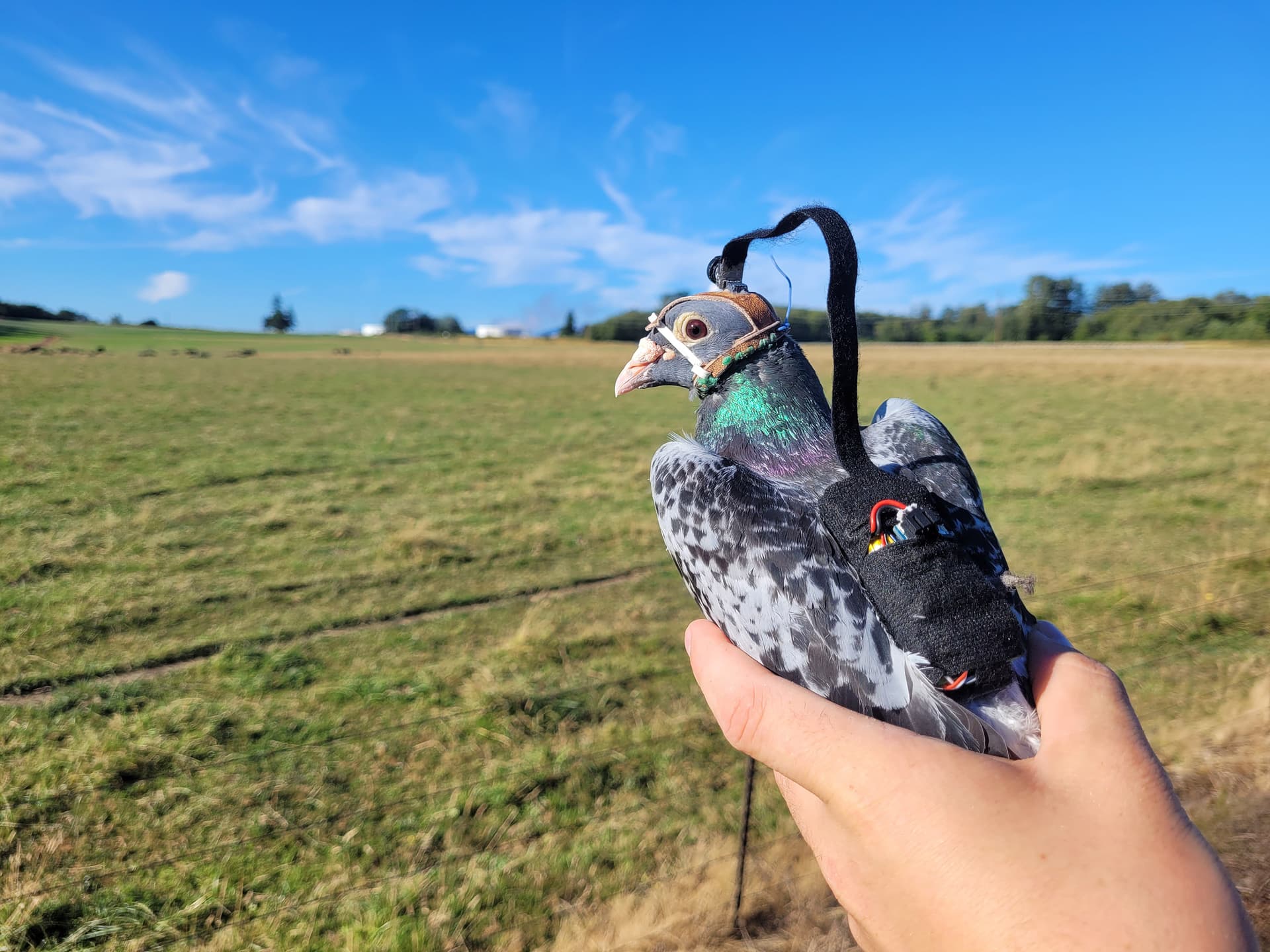
The hardware itself is the kind of thing that makes the whole project sound half whimsical, half seriously engineered. UBC researchers hand-sewed custom falconry-style hoods and miniature backpacks to carry the cameras and computers, and the full setup weighed just 27 grams. Two pigeons at a time wore the rigs inside a flock of about 16, while half the birds carried dummy packs so the team could compare behavior without loading the whole flock the same way.
The birds were released on a familiar route, which matters because it keeps the experiment grounded in normal flight rather than a one-off panic run. According to the UBC Science account, the rig was built to ride with the bird, not fight it, and that is exactly the sort of design logic drone engineers care about. If a vision system can survive movement that natural and messy, it is closer to being useful in the field.
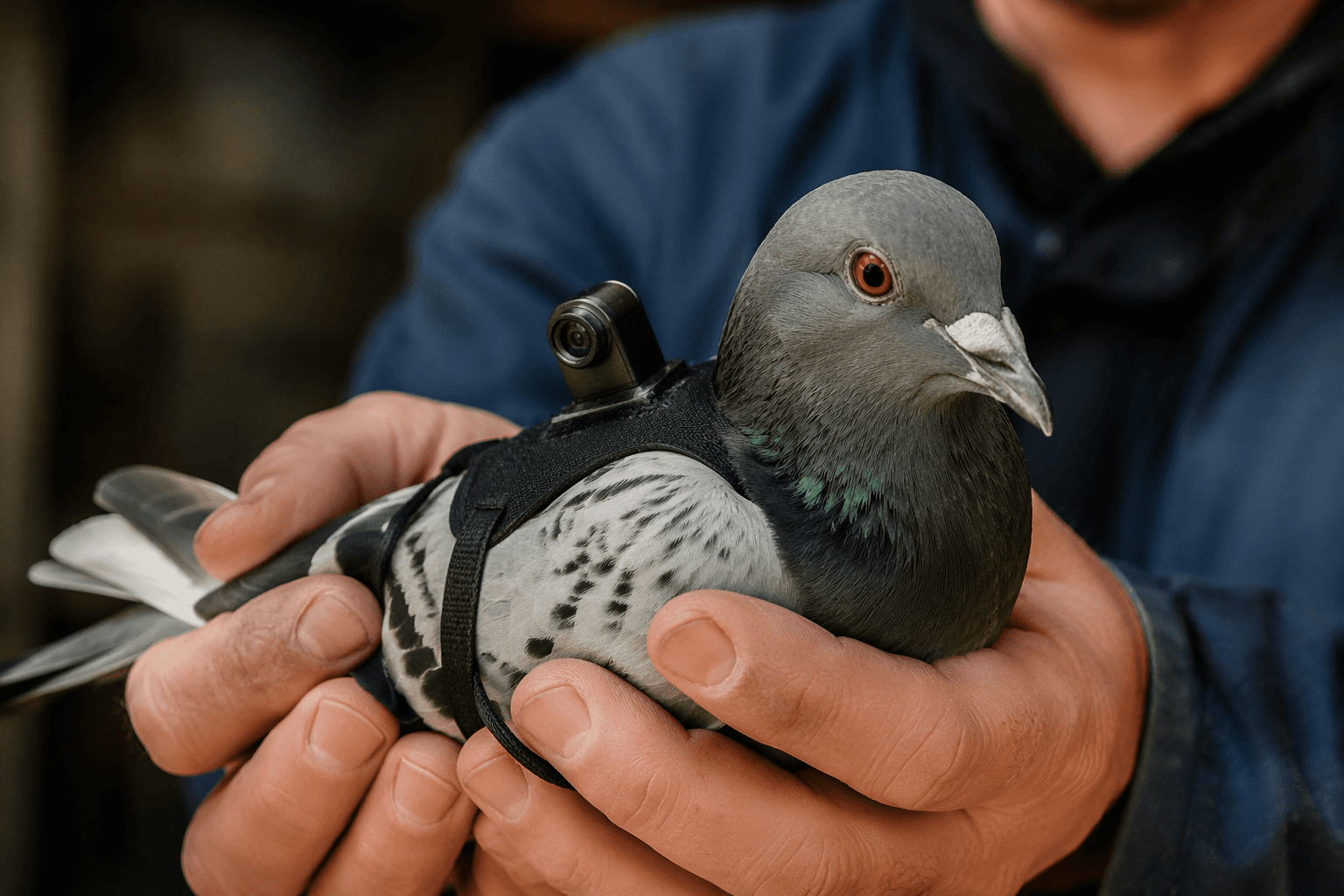
Anthony B. Lapsansky, the study’s lead author, said his falconry background helped him design the hood-and-backpack arrangement. That detail is not just a good story. It explains why the setup looks so specific and why the team could mount a miniature computer, a modified camera and a motion-orientation unit without turning the pigeons into awkward lab props.
What the pigeons’ eyes were actually doing
The eye-behavior result is the part that gives the story real technical bite. The study found that pigeons made slow, subtle eye movements during forward flight rather than locking their eyes in place. Then, as they landed, their eyes turned inward, a motion that may support stereopsis, the depth judgment that comes from comparing two eye views.
Doug Altshuler said pigeons are a strong model because they are representative of many birds, their side-mounted eyes give them an almost panoramic view, they are easy to train, and they reliably fly home. That combination makes them useful far beyond birdwatching trivia. If a bird can keep the horizon stable in its visual field while the body is moving and then switch into a depth-sensitive landing mode at the perch, that is exactly the kind of adaptive behavior drone designers would love to steal.
The abstract of the Current Biology paper is even more explicit about the pattern: pigeons made slow divergent eye movements in flight and large convergent eye movements when landing, which fits the idea that they stabilize the horizon and use stereopsis at touchdown. In plain camera terms, that is a biological version of two different jobs, one for cruising and another for the final approach.
What could make it into future drones
This is the section where it helps to stay honest about what is lab-stage and what is realistic. The likely payoff is not some magical bird-eye drone. The likely payoff is a better autonomy stack that uses camera information more intelligently, especially when the aircraft is trying to maintain framing while also keeping itself out of trouble.
The most believable consumer gains are:
- smarter landing logic that reads the visual field instead of relying on a simple descent routine
- better obstacle avoidance in places where GPS is poor and range sensors are not enough
- improved tracking when the subject moves unpredictably across a busy background
- more stable framing that reacts to motion the way a flyer would, not just the way an inertial sensor would
That is where the work lands in the long robotics tradition of learning from animal flight. The University of British Columbia team, including Douglas R. Wylie, Alex Walls, Sadie Harley and Andrew Zinin among the named authors, is not building a bird drone for spectacle. The point is to understand the visual strategy that lets birds stay composed in the air, then see how much of that logic can be translated into autonomous flight and robotic vision systems.
What to watch for next
The useful question is not whether this makes for a better headline than a product launch, because it obviously does. The real question is which part of the bird’s visual playbook survives the jump into consumer imaging hardware. If future drones borrow even part of that alternating behavior, with horizon-stabilizing flight vision up top and depth-aware landing logic at the end, the changes will show up where photographers feel them first: smoother footage, better subject retention and fewer failed autonomous maneuvers in awkward places.
That is the quiet promise hiding inside the tiny pigeon cameras. The birds are not the product, and they are not the destination. They are the clue that future camera drones may need to see less like machines and more like flyers that know exactly when to hold the horizon steady and when to look inward for the landing.
Every story on Photography News is assembled by an automated editorial system that works from verified research, official records, and credible reporting, then clears automated accuracy and moderation checks before it goes live. The standards that system follows are set and overseen by the people who run the publication. Read our full editorial policy.
Did this article answer your question?