Kathie Thomas builds her bird photography around a camera she can carry all day, point quickly, and trust when a subject is far beyond easy reach. In the Dandenong Ranges in Victoria, Australia, where she keeps a daily eBird record of the birds she sees and hears, that matters as much as megapixels or brand-new autofocus modes. Her favorite camera, Nikon’s Coolpix P950, is a reminder that the smartest birding tool is often the one that keeps you shooting when a heavier kit would stay in the bag.
A bird photographer shaped by notebooks, family, and repetition
Thomas did not arrive at bird photography by accident. Her parents bought her first camera for her 14th birthday, and she says an uncle who worked as a wedding and portrait photographer helped spark her early interest by sharing his own experiences. That foundation shows up in the way she works now: this is not casual snapshot birding, but a disciplined mix of field notes and photography.
She has also logged serious hours behind Nikon bodies. Thomas says she wore out a D90 after nearly 100,000 images, and her current lineup includes a D7000, a D7100, and the P950. That progression matters because it shows the P950 is not a novelty purchase. It sits beside older DSLR bodies in a working bird photographer’s kit, chosen for the job it does best rather than for spec-sheet bragging rights.
Why the P950 wins when the subject is small, skittish, or simply far away
The P950’s appeal starts with reach. Nikon describes it as an 83x optical zoom camera with 24mm-to-2000mm equivalent reach, and DPReview’s overview lists a 24-2000mm-equivalent lens, raw capture, 4K/30p video, a mic input, a fully articulated screen, and an electronic viewfinder. That combination gives Thomas an unusual amount of framing flexibility in one body.
For birding, that flexibility is the point. A small bird perched high in a tree, a subject across a creek, or a distant silhouette on a branch can all be framed without swapping lenses or hauling a huge telephoto zoom. The camera’s Dual Detect Optical VR, rated to 5.5 stops of shake reduction, also helps make that reach usable handheld, which is essential when birds move and the moment is over in seconds.
At 1005 g, the P950 is still a substantial camera, but it is much easier to carry than the interchangeable-lens telephoto setups many bird photographers use for similar reach. That weight makes it a practical all-day companion, not a studio body dressed up for wildlife. Thomas’s preference for it comes down to the same two things that matter in the field: it is lightweight, and it gives her excellent bird shots.
The kind of birding routine that rewards portability
Thomas’s gear choice makes even more sense once you look at her routine. She began using eBird seriously in 2022, and by January 2025 she had recorded 246 individual species. In 2024 alone, she logged 214 bird species and 36 lifers, and more than 60 of the species she had recorded by early 2025 were seen on her own property in Selby, Victoria.
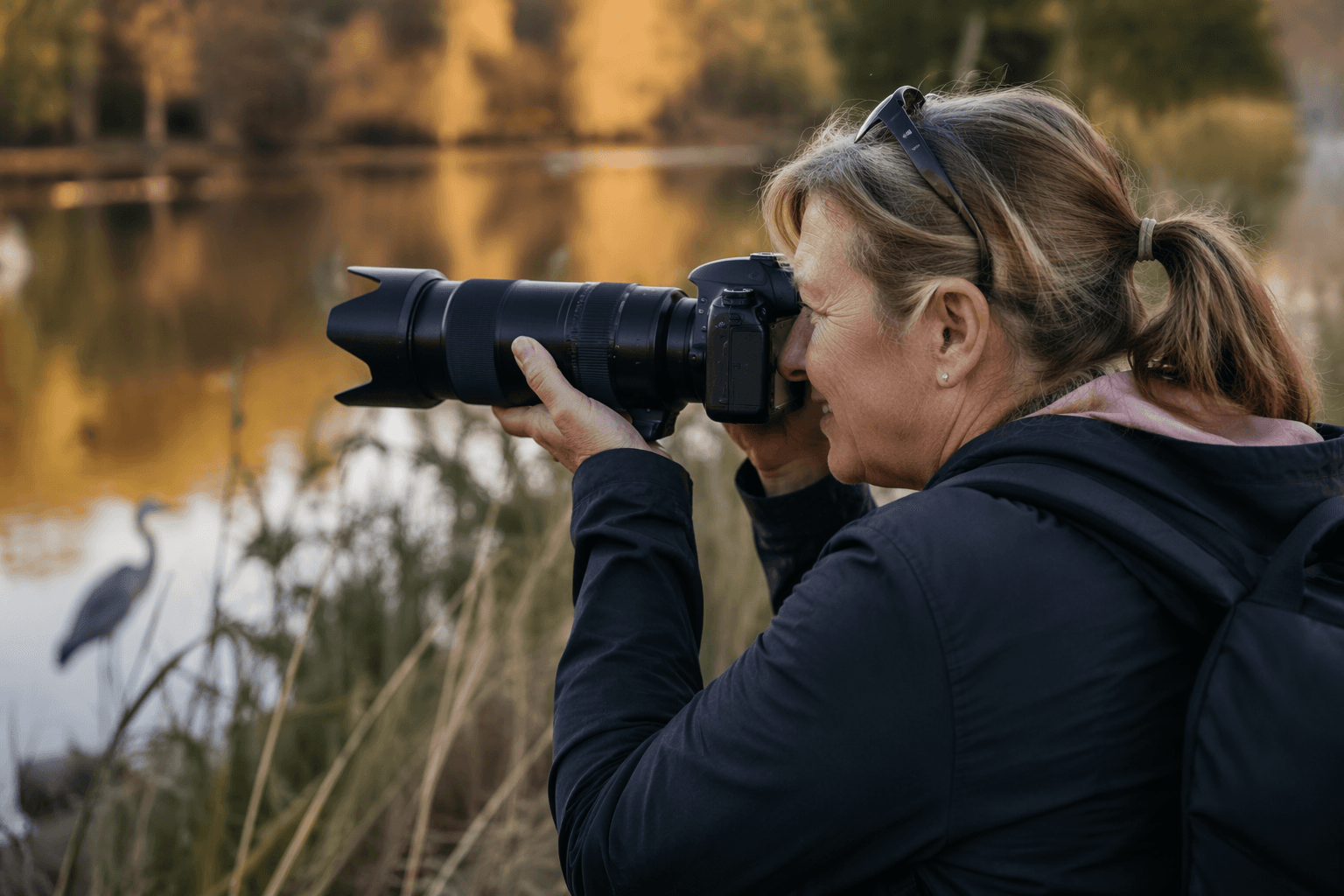
That is a strong argument for a camera that is always ready. Birding at that pace means long sessions, changing light, and plenty of time spent waiting for one useful frame. Thomas says she carries spare batteries because endurance matters, along with water, snacks, and a simple backpack that keeps her gear secure. The package sounds modest, but it fits the work: stay mobile, stay comfortable, and keep the camera close enough that a bird appearing for ten seconds is still a photograph, not just a missed opportunity.
Her 2023 eBird challenge year adds another layer to that habit. She said that year included daily reporting streaks, which is exactly the kind of consistency that turns casual sightings into a real record. The camera becomes part of the logbook, not a separate hobby.
Why the Dandenong Ranges make a long zoom feel natural
The local setting also explains the appeal of a superzoom. eBird has hotspot and checklist pages for the Dandenong Ranges National Park and the Dandenong Ranges Botanic Garden, which underscores how active the area is for birdwatching. Avibase also recognizes the Dandenong Ranges as a birding hotspot with an illustrated checklist, reinforcing the idea that this is a place where species documentation matters.
In a landscape like that, the best birding camera is not the one that looks most impressive in a gear bag. It is the one that can handle canopy birds, garden birds, and distant subjects without slowing the photographer down. Thomas’s P950 is built for exactly that kind of work: long reach for shy birds, enough stabilization to shoot handheld, and a body light enough to make the whole outing feel doable.
Where the superzoom wins, and where it gives up ground
The P950’s biggest strength is obvious. It lets Thomas photograph birds at distances that would otherwise demand a much larger and more expensive telephoto setup, and it does so in a single compact package. That makes it ideal for birders who care about portability, who want one lens to cover everything from wide environmental frames to extreme reach, and who prefer to keep moving rather than assembling a larger system around one birding session.
The compromise is just as real. The P950’s 16MP 1/2.3-inch sensor is not built to match the low-light performance or subject separation of larger-sensor mirrorless bodies with big telephotos. When light falls, or when a photographer wants creamier background blur and more room to crop aggressively, a bigger sensor and faster lens system can offer more headroom. The P950 is the better tool when the priority is reach in a manageable form, not maximum image quality in every condition.
That tradeoff is exactly why Thomas’s story lands. She is not using the P950 because it is the newest thing on the shelf. She uses it because her birds, her property in Selby, her daily eBird habit, and the distances she photographs all line up with what the camera does best. In a hobby obsessed with bigger bodies and pricier lenses, her bag makes the oldest argument in photography feel current again: the best camera is the one that fits the way you actually shoot.
Every story on Photography News is assembled by an automated editorial system that works from verified research, official records, and credible reporting, then clears automated accuracy and moderation checks before it goes live. The standards that system follows are set and overseen by the people who run the publication. Read our full editorial policy.
Did this article answer your question?