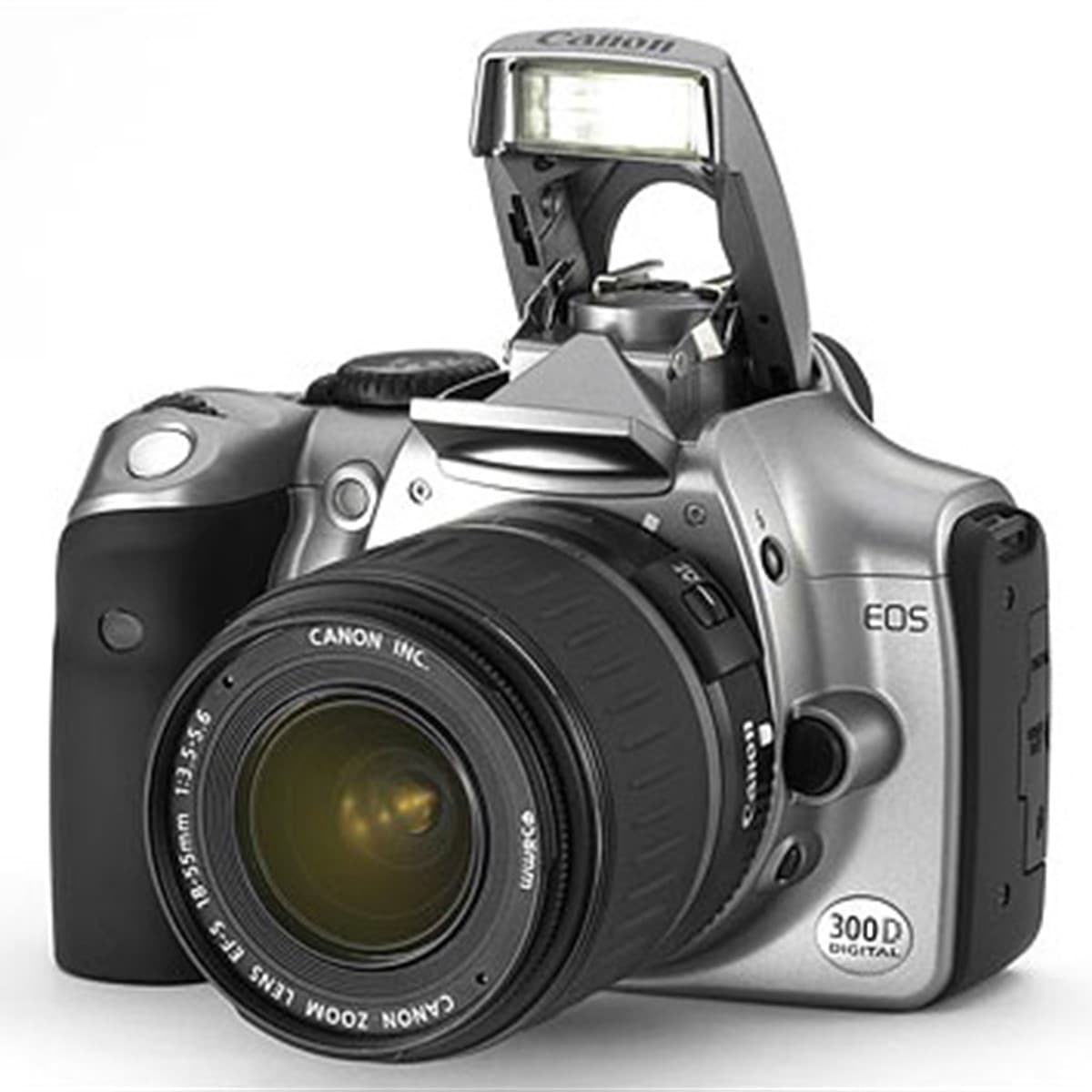
Canon Rebel 300D revisited as a serious tool for hobby photographers
The Rebel 300D is primitive by 2026 standards, but its 6.3-megapixel files, compact body and cheap entry price still make it a surprisingly usable creative toy.
A 23-year-old Rebel 300D can still turn an ordinary walk into a satisfying photo session. The question is whether an early digital SLR can still earn its place as a cheap, serious hobby tool.
Why the 300D mattered then
Canon introduced the EOS Kiss Digital, also sold as the EOS Digital Rebel and EOS 300D, in September 2003. Canon positioned it as a compact, lightweight entry-level digital SLR with an affordable price, and later described it as a breakthrough that helped spur growth in the digital SLR market. It was not Canon’s first DSLR, but it was one of the first consumer models that made interchangeable-lens digital shooting feel realistic for ordinary buyers.
The price told the story. At its US announcement on August 20, 2003, the camera cost $899 body-only, with a kit package just under the psychologically important $1,000 mark. Canon had effectively stripped down the EOS 10D into a consumer body, which is exactly why the 300D felt like a doorway camera rather than a prestige object. Canon says it held No. 1 global share of interchangeable-lens digital cameras for 23 consecutive years from 2003 through 2025.
What you get when you pick one up now
By modern hobbyist standards, the 300D is tiny, simple, and a little stark. The body measures 142 x 99 x 72.4 mm and weighs about 560 g, which keeps it genuinely portable even today. It slips into the “grab and go” category in a way many current cameras, with deeper grips, heavier batteries and bigger lenses, do not.
The core imaging specs are a reminder of how much digital photography has changed. It has a Canon-developed 6.3-megapixel APS-C CMOS sensor, the DIGIC image processor, 7-point wide-area autofocus, RAW+JPEG recording and PictBridge support. It was also the first camera to support Canon’s EF-S lens mount, a detail that mattered because it widened the lens options for APS-C shooters and helped define Canon’s beginner system for years.
How it handles in a serious shooting session
The 300D does not flatter you with speed or complexity. Its 7-point autofocus is a far cry from the dense subject-tracking systems on today’s entry bodies, so this is not the camera you reach for when you want to chase fast action or trust autofocus to do the heavy lifting. But for a slower, more deliberate style of shooting, that limitation becomes part of the exercise: you pre-focus, you choose your angle earlier, and you stop expecting the camera to rescue a loose composition.
The compact body helps, because a lighter camera is less fatiguing in hand and easier to carry for a long stretch. At the same time, the older controls and lower-resolution rear-view experience force a more tactile pace than a modern body would.
What the files look like today
The 6.3-megapixel ceiling is the obvious limit, and it is also the camera’s most useful boundary. A 300D file will not give you the cropping freedom, low-light cleanliness or recovery headroom of a modern entry-level body. High ISO performance, in particular, is where 2026 expectations leave it behind quickly.
The files still have a practical appeal. Six-point-three-megapixel APS-C images are enough for web use, smaller prints and a disciplined shooting style that rewards framing in camera. The camera’s RAW+JPEG support also matters here, because it gives you a way to work with the files as capture material rather than as finished products straight out of the body.
The fun factor is the real argument for revisiting it
It sits at a hinge point in hobby photography history, when digital SLR ownership stopped feeling remote and started feeling attainable. That is still legible in the camera’s design and in the way it nudges you to slow down, think in terms of lenses, and accept constraints that can be creatively useful.
Canon describes the 300D as a breakthrough that helped grow the digital SLR market, while its price undercut a major barrier to entry. Nikon’s competing D70, released on March 19, 2004, shows how quickly the market had to react once Canon made affordable DSLRs feel normal.
So, is it worth revisiting?
If your idea of a “serious tool” means the best autofocus, the cleanest high ISO and the most flexible files, the Rebel 300D loses that argument immediately. If your idea of a serious tool means something that still lets you make thoughtful, attractive pictures without demanding much money or much attention, it has a real case.
This article was produced by Prism’s automated news system from verified source data, official records, and press releases, then run through automated quality and moderation checks before publishing. The system is built and supervised by the people who set the standards it runs under. Read our full AI policy.
Did this article answer your question?