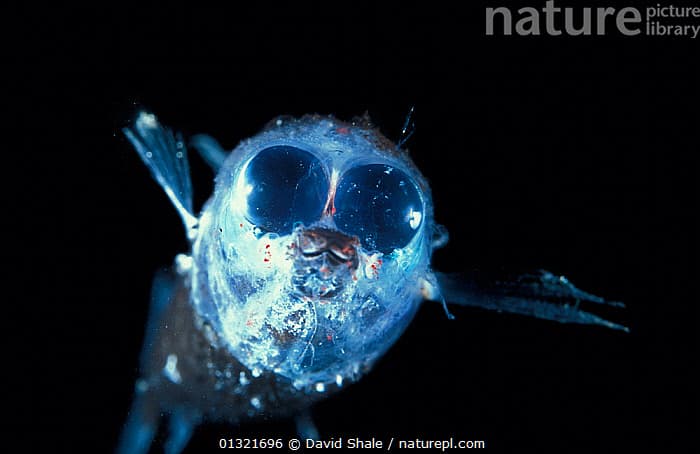
The first ever footage of a barreleye fish, Winteria telescopa, in its natural habitat was recorded about 710 meters below the surface. On the same expedition, researchers uncovered two new hydrothermal vent fields in the Doldrums Megatransform and Fracture Zone, a hard-to-reach stretch of the Atlantic Ocean just north of the equator and roughly 800 miles off Brazil’s northeast coast.
The voyage ran from May 17 to June 20, 2026 aboard Schmidt Ocean Institute’s R/V Falkor (too) and was led by MBARI Senior Scientist Aaron Micallef. To work in the dark, high-pressure seafloor where sunlight never reaches, the team split the imaging and mapping jobs between ROV SuBastian and The Childlike Empress, an autonomous underwater vehicle making its first scientific research deployment. SuBastian handled detailed geological and biological surveys and sampling, while The Childlike Empress mapped the seafloor and used its sensors to detect chemical clues indicating venting.
The Doldrums region spans about 60,000 square kilometers, or 23,000 square miles, roughly the size of Lake Michigan. The fault zone cuts across the Mid-Atlantic Ridge, which stretches more than 16,000 kilometers. At nearly 4,000 meters depth, the team found two hydrothermal fields, where black smoker chimneys pumped superheated water into the freezing deep.
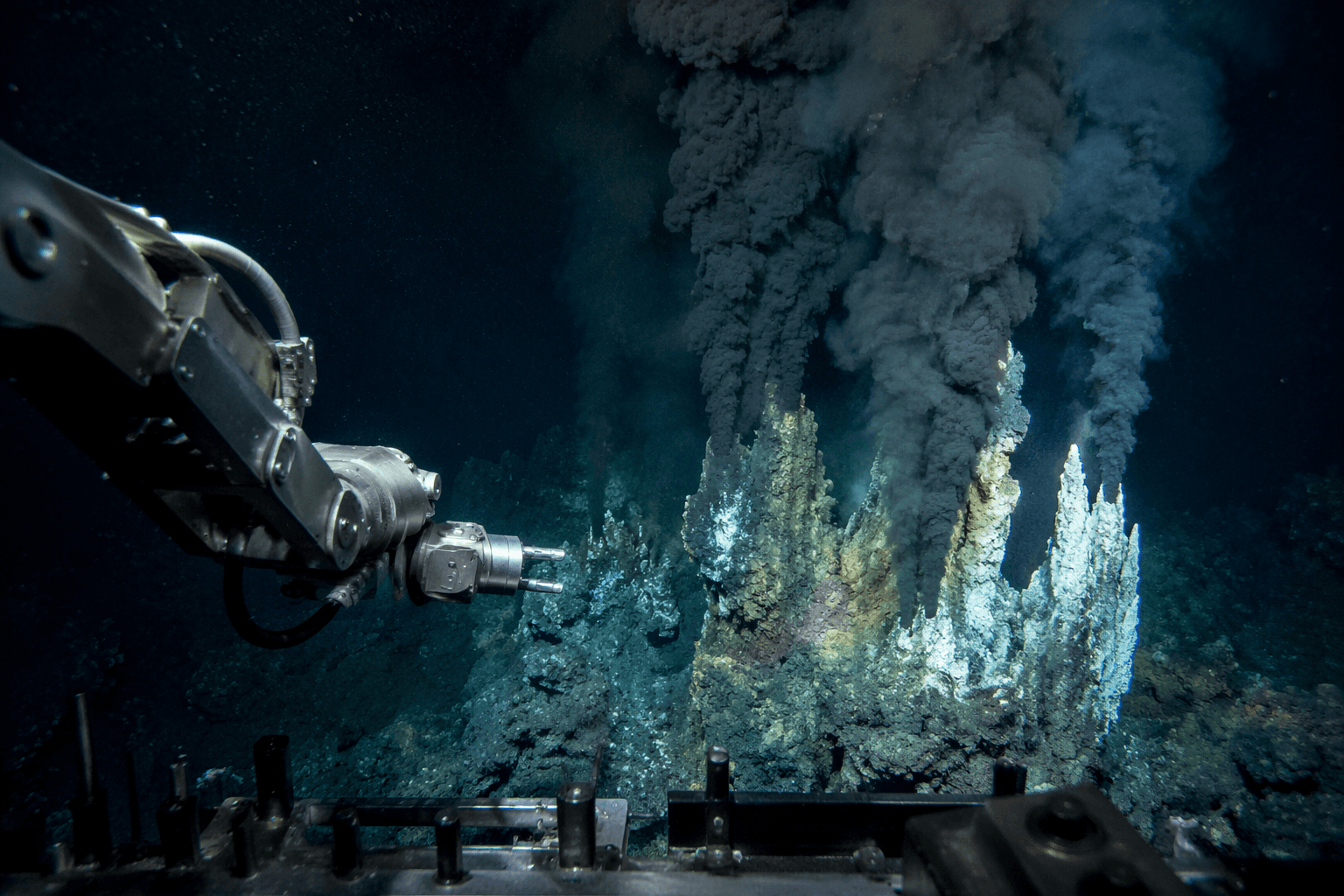
The new fields mix ordinary volcanic venting with serpentinization, the chemical reaction in which seawater interacts with mantle rocks and generates hydrogen and other reduced chemicals that can feed deep-sea microbes. Only a small number of similar mixed vent fields are known worldwide, and Lost City on the Mid-Atlantic Ridge remains the best-known example. Around the mineral chimneys, the expedition documented shrimp, crabs, and anemones clustered in the vent glow, along with two bigfin squid elsewhere on the cruise.
Every story on Photography News is assembled by an automated editorial system that works from verified research, official records, and credible reporting, then clears automated accuracy and moderation checks before it goes live. The standards that system follows are set and overseen by the people who run the publication. Read our full editorial policy.
Did this article answer your question?