Emily Eden's India sketches reveal life before photography
Emily Eden's India sketches show how composition, viewpoint and detail can do a photographer's work before the shutter. Her pages read like a field guide to seeing.

In 1844, Emily Eden’s sketches of northern India appeared in the hand-coloured lithographic volume *Portraits of the Princes and People of India*. The images do not just preserve faces and costumes, they hold rank, movement, and atmosphere in a way that feels startlingly close to visual reporting.
A pre-camera eye that behaves like a lens
Emily Eden, born in 1797 and dead by 1869, was a British poet, novelist, writer, traveler and artist who crossed northern India in the 1830s with her brother George Eden. George served as governor-general of India from 1836 to 1842, and Emily, along with her sister Frances, known as Fanny, accompanied him after his appointment. She returned to England in 1842.
*Portraits of the Princes and People of India* behaves like visual journalism before the camera became the default witness. Eden drew princes, servants, attendants, warriors, hill communities, ordinary people and even animals, building a record of northern India that captures social distance as clearly as likeness.
Why the new Delhi exhibition sharpens the story
The new exhibition *Princes & People of India: Portraits by Emily Eden* opened at DAG in New Delhi on July 10, 2026. The show is the first major exhibition in India dedicated to Eden and is curated by art historian Mary Ann Prior. The display brings together drawings, archival material and historical narratives.
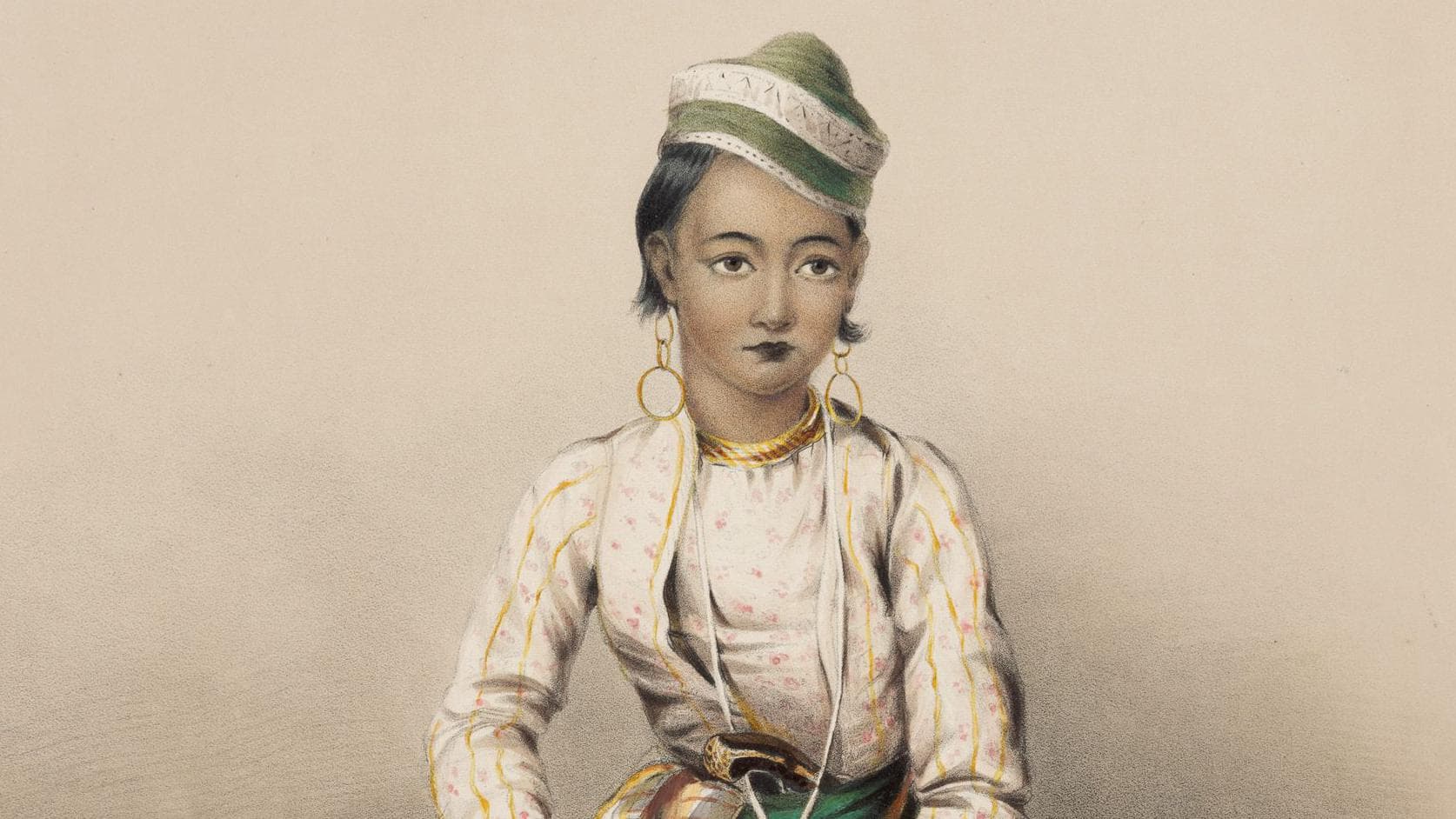
Eden’s work rewards the same habits you use when you are deciding whether a frame is a portrait, a scene, or a social document. The gallery’s presentation makes clear that her drawings do not sit in isolation. They create a vivid panorama of a society in transition.
Five visual habits photographers can steal from Eden
- Compose the social world, not just the sitter. Eden’s pages include princes, attendants, servants and ordinary people, which means the frame is never only about one person. In modern documentary work, that is a reminder to step back far enough to show who is inside the circle of power, who is outside it, and how they share the same space.
- Use viewpoint to explain hierarchy. A sketch can make status visible through placement, scale and proximity, and Eden understood that instinctively. If you are shooting on the road, the camera position you choose can say as much as the subject itself. A slightly wider, more patient viewpoint often tells the truth better than a tight crop that strips away context.
- Keep the small evidence. Eden’s India is full of dress, bodies, animals and everyday presence. That detail is what keeps the work from turning into costume. For photographers, the equivalent is the detail that seems minor in the moment, a folded cloth, a doorway, a tool, a shoe, a cart, a glance, but later turns out to be the image’s memory hook.
- Think about light and color as structure, not decoration. Her sketches became hand-coloured lithographs after she returned to England, which means the image had to work before color arrived. That is a good lesson for photographers shooting color travel work now: if the frame falls apart in monochrome, the color is probably doing too much. Strong images hold their shape first, then let color carry mood.
- Build a sequence, not a trophy frame. *Portraits of the Princes and People of India* is a book-length record, not a one-off image. The power comes from accumulation, from moving across people, settings and social types until a world emerges.
When photography arrived, Eden’s record only became more valuable
Photography came to India in the 1840s and became more established in the 1850s, when the British increasingly treated it as an objective tool of imperial documentation. The Photographic Society of Bengal opened in 1856 and had about 88 members, including 4 women, by 1857. Eden’s earlier drawings show India before photography’s authority hardened into routine.
The record includes 23 salt-fixed calotypes and 3 photograms, likely made by a female photographer in Uttar Pradesh between 1843 and 1845, among the earliest surviving images from India.
This article was produced by Prism’s automated news system from verified source data, official records, and press releases, then run through automated quality and moderation checks before publishing. The system is built and supervised by the people who set the standards it runs under. Read our full AI policy.
Did this article answer your question?