PetaPixel compares full-frame sensors for detail, dynamic range, and cropping flexibility
The real sensor question is not who has the biggest number. It is which full-frame body gives you usable detail, crop room, and shadow recovery in the kind of files you actually shoot.
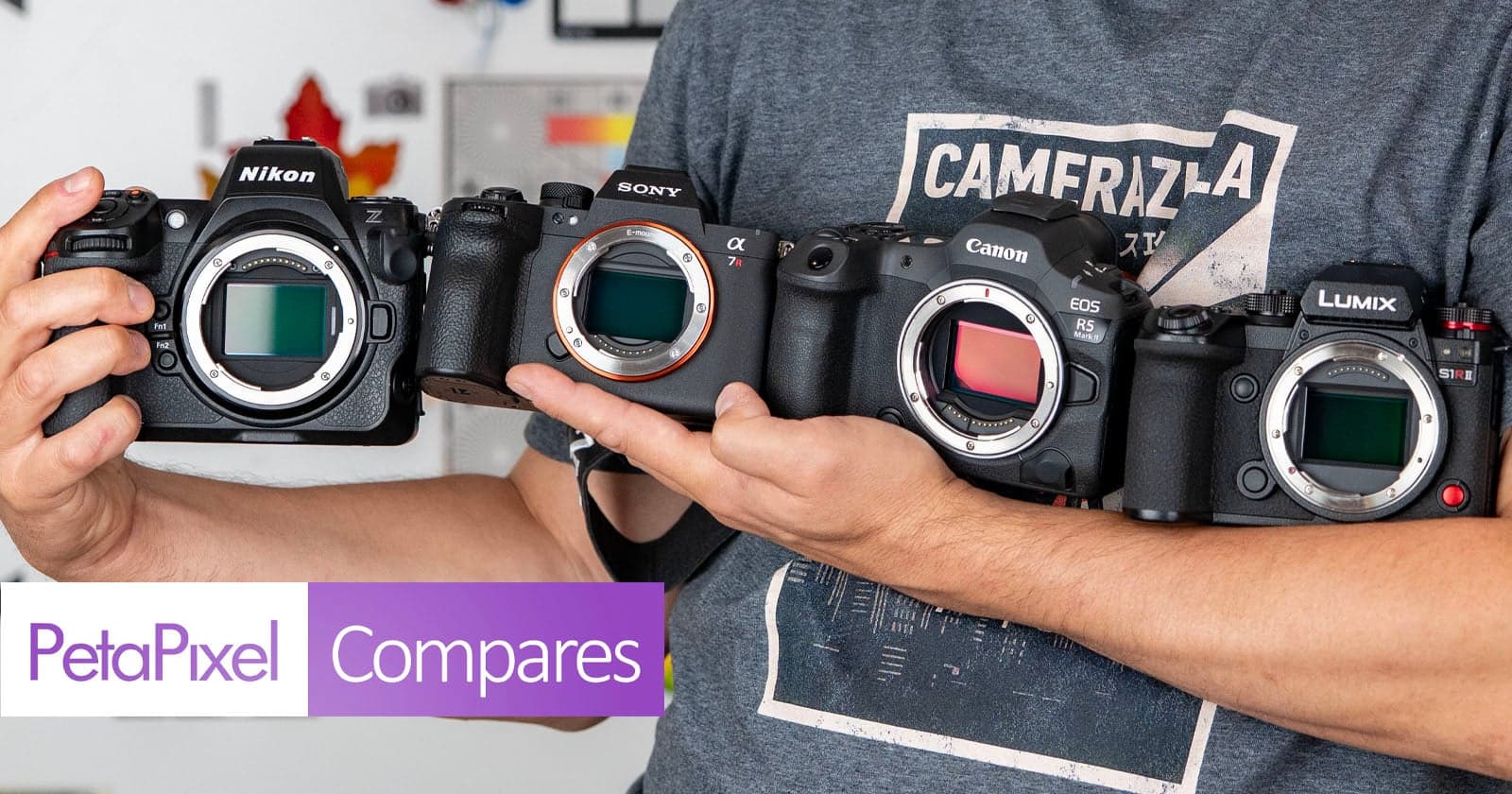
A Nikon Z8, Sony a7R V, Canon EOS R5 Mark II, or Leica SL3 puts you in the part of the market where spec sheets get seductive fast, but the buying decision is usually more practical than that. The question stops being “which camera is sharp?” and becomes “which sensor keeps paying off when I crop, print, or pull the file hard in Raw?”
What the showdown is really measuring
This comparison lives in the part of the market where sensor design is supposed to be at its peak. Nikon launched the Z 8 on May 10, 2023, Sony released the a7R V in October 2022, and Canon launched the EOS R5 Mark II on July 17, 2024, so the field spans different generations and different philosophies. Landscape work wants fine texture, studio work wants clean detail, wildlife often wants crop flexibility, and anyone making large prints wants files that still hold together after serious editing.
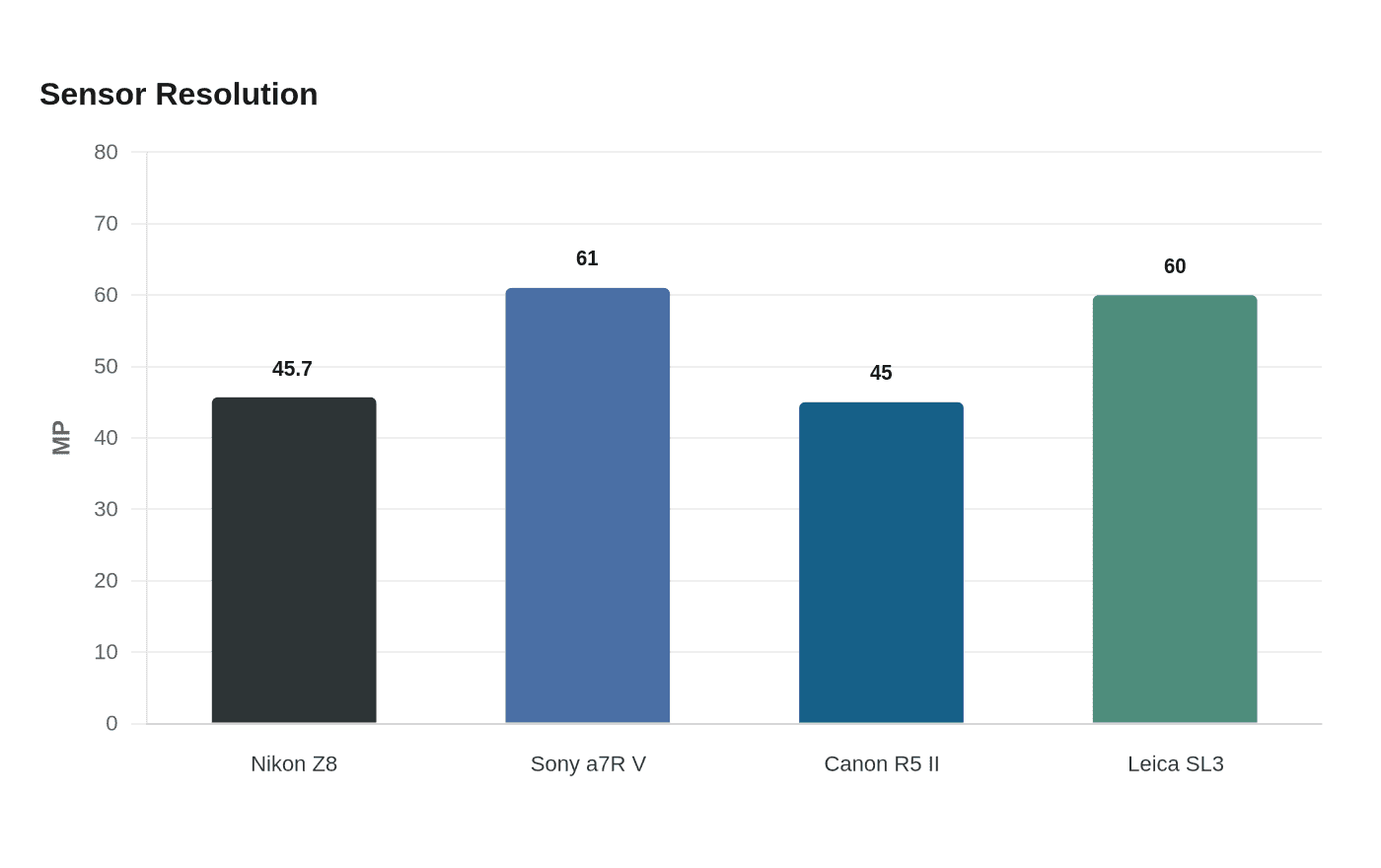
The Nikon Z8 is especially interesting because DXOMARK identifies it as using the same 45.7-megapixel stacked BSI CMOS sensor as the Z9. Nikon says the Z 8 condenses flagship Z 9 performance into a smaller body. Nikon positions it for landscape, wildlife, portrait, wedding, and aviation shooters, not just one niche.
The cameras in the mix
On paper, the spread is narrower than it first looks. The Nikon Z8 carries a 45.7-megapixel full-frame sensor and an ISO range of 64 to 25,600. Sony’s a7R V uses a 61.0-megapixel full-frame back-illuminated Exmor R CMOS sensor, plus a dedicated AI processing unit, and Sony leans hard on its resolution story. Canon’s EOS R5 Mark II arrived as a professional full-frame mirrorless body for stills and video creators, while Canon’s EOS R5 line sits at about 45 effective megapixels with a Canon-developed CMOS sensor. Leica’s SL3 sits at 60 megapixels, but adds Triple Resolution Technology, letting you output 60, 36, or 18 MP files from the same sensor.
In PetaPixel’s 2024 high-res comparison, the Sony a7R V was roughly $3,898, the Nikon Z8 roughly $3,796, and the Canon EOS R5 Mark II roughly $4,299.
Where resolution actually shows up
Landscape and large prints
This is where the a7R V’s 61-megapixel count starts to matter in a way you can see, not just measure. PetaPixel’s 2026 best-camera guide singles out the Sony a7R V as a standout landscape camera because of that sensor: more pixels make it easier to preserve fine rock texture, foliage, distant ridgelines, and small tonal shifts in a big print. Leica’s SL3 belongs in the same conversation for the same reason, with its 60-megapixel sensor giving you similar room for detail-heavy work.
The practical difference is not that a 45-megapixel file cannot make a beautiful landscape print. It can. The difference is how much margin you keep when you want to crop away clutter, straighten a horizon, or print larger without the file starting to feel stretched.
Wildlife and cropping flexibility
This is where the Nikon Z8 earns its keep. A 45.7-megapixel file is already substantial. In wildlife, that sensor balance matters because you are often working with subjects that move a little too far away, a little too fast, or both.
The a7R V still wins the raw pixel-count argument with 61.0 megapixels, but the Z8 gives you serious crop room for birds, aviation, and sports-style reach without turning the camera into a brute-force resolution machine that ignores the rest of the shooting experience.
Studio and product work
In controlled light, the sensor conversation shifts from “How much can I crop?” to “How much texture survives when I zoom in on the file?” That is where the Canon EOS R5 Mark II and the Canon R5 line’s roughly 45 effective megapixels make sense alongside the Nikon Z8. At this level, you are usually chasing clean rendition of fabric, metal, packaging, skin, and edges.
The Leica SL3’s Triple Resolution Technology adds another wrinkle that studio shooters can actually use. Dropping from 60 MP to 36 or 18 MP lets you tailor file size to delivery without changing bodies, which is appealing if you alternate between high-detail catalog work and faster handoff files for client review.
Dynamic range is about use, not bragging rights
The Nikon Z8’s 45.7-megapixel stacked sensor, Sony’s 61.0-megapixel BSI Exmor R design, and Leica’s 60-megapixel BSI sensor all promise files with enough depth to survive serious editing. The visible differences tend to show up when you are printing large, cropping hard, or working in a controlled environment where every bit of fine texture matters.
How to read the spec sheet like a buyer
If your work is landscape, the Sony a7R V and Leica SL3 make the strongest case when absolute detail is the priority. If your work leans toward wildlife or mixed use, the Nikon Z8 is the more interesting argument because its 45.7-megapixel sensor is already deep enough for cropping, while Nikon still positions the camera as a fast, versatile body rather than a one-note resolution tool. If you live in studio, product, or client-delivery workflows, Canon’s EOS R5 Mark II and the broader R5 line stay in the conversation because 45 megapixels is already a serious working file, especially when paired with a body built for stills and video.
This article was produced by Prism’s automated news system from verified source data, official records, and press releases, then run through automated quality and moderation checks before publishing. The system is built and supervised by the people who set the standards it runs under. Read our full AI policy.
Did this article answer your question?