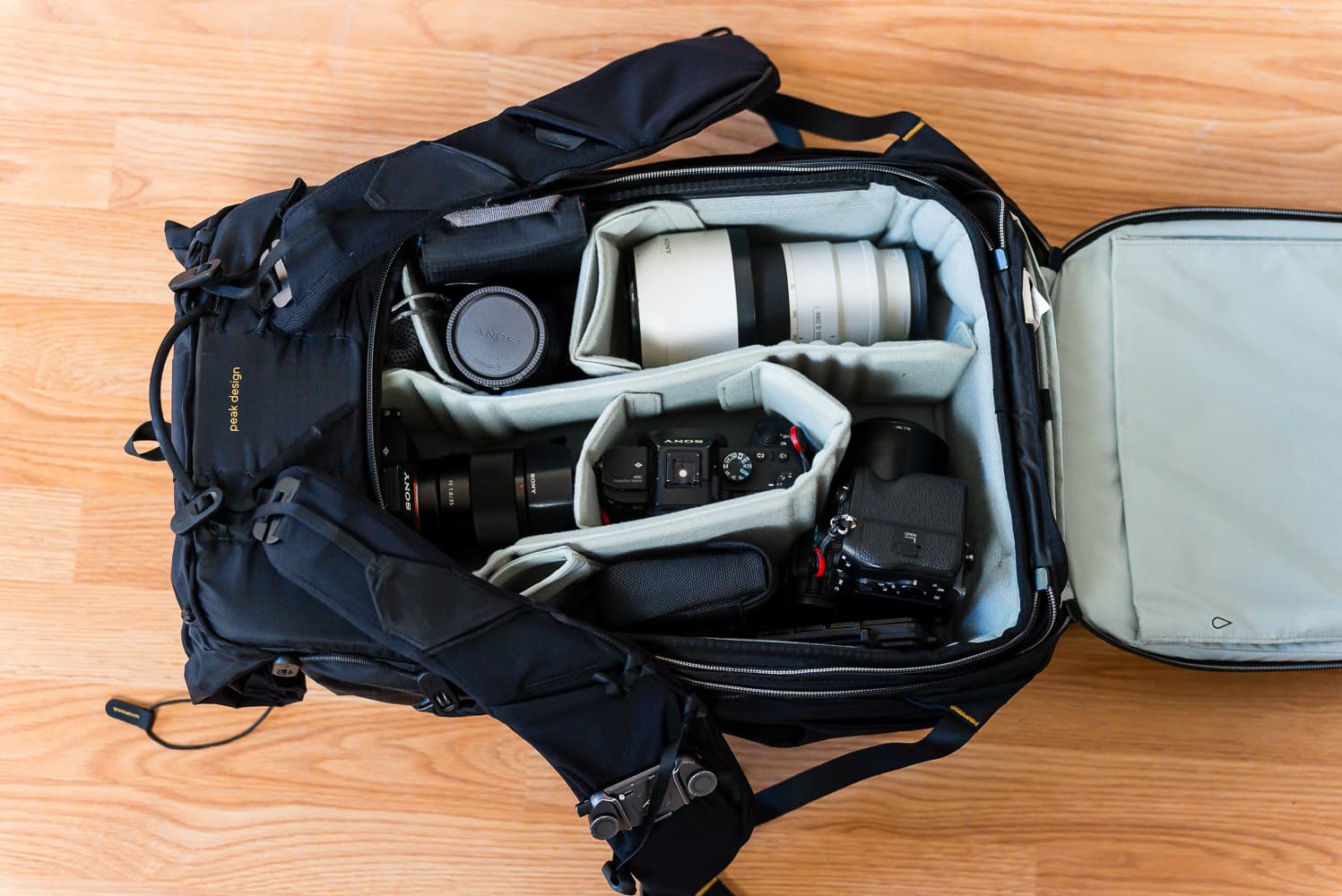
A vacation camera bag can quietly fill with backup bodies, extra lenses, cards, batteries, and every “just in case” item that turns a walk into a logistics exercise. Dmitry Koshutin starts with the familiar promise of “just one camera,” then shows how quickly that bargain fails. Carry less, and you split your attention less between the scene in front of you and the gear on your shoulder.
Start with the trip, not the kit
Koshutin’s first move is to treat packing like a decision tree instead of a shopping list. Before a camera ever goes in the bag, he asks three questions: where are you going, who are the photos for, and how present do you want to be with the people you are with. That filter matters because a beach week, a family visit, and a day built around portrait-making all reward different levels of weight, speed, and flexibility.
Once those questions are honest, the camera choice usually gets clearer. A heavy medium-format body can make sense when the point is final images with real print value, while a compact fixed-lens camera makes more sense when movement, meals, and conversations are part of the assignment. Bring a setup you can actually keep on your shoulder all day.
Pick one limitation on purpose
The cleanest vacations often come from choosing a constraint before you leave the hotel. Koshutin describes using a Widelux FVI when he wanted the discipline of 20 exposures and the creative pressure that comes from knowing every frame matters. That kind of limit changes behavior immediately: you stop spraying and praying, and you start reading light, gesture, and background before you press the shutter.
The Widelux has the right sort of old-school stubbornness for that mindset. Panon Camera Shoko in Tokyo manufactured the swing-lens panoramic camera from 1959 to 2000, and the FVI is a 1969 model. Widelux cameras exposed 24 x 59mm panoramic images on 35mm film, so the camera’s appeal was never convenience.
If a camera or lens choice makes you hesitate less and think more, it can improve the final set even if it looks less “complete” on paper.
Let the job decide the camera
Koshutin’s other example is more modern and more revealing: he uses a Fujifilm GFX 100 II with an 80mm f/1.7 when he wants portraits worth printing and sharing, but he keeps it near the car instead of hauling it everywhere. A camera can be perfect for the pictures you hope to make and still be wrong for the hours you need to carry it.
The Fujifilm GFX 100 II uses a 102-megapixel GFX 102MP CMOS II HS sensor and can shoot up to 8fps, which makes it a serious large-format tool with more modern speed than older medium-format bodies. At launch in 2021, Fujifilm positioned the matching GF80mmF1.7 R WR as the fastest autofocus lens in the G Mount lineup; it weighs about 795g. That combination explains the appeal and the burden at the same time: it is built for portraits with gorgeous detail, but it is still substantial enough that leaving it in the car can be the smartest way to keep the rest of the day light.
A vacation kit works best when each body and lens has a job. If the trip is about family candids, a portable camera earns its place because it will actually come out of the bag. If the day is about one set of portraits or one stitched panorama, heavier glass can be justified because the payoff is specific and the carry time is limited.
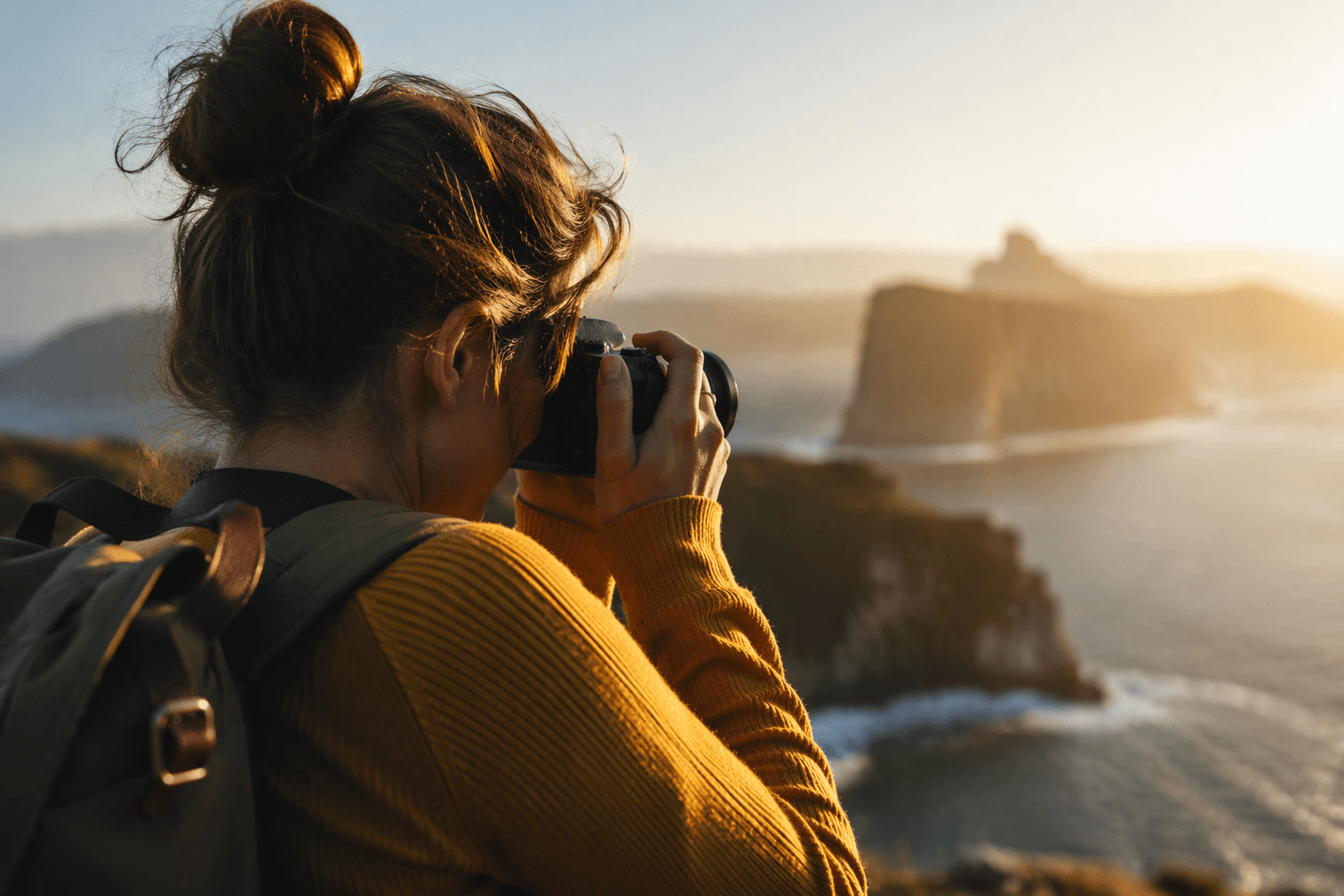
Small bodies can open up the frame
Fujifilm announced the GFX100RF on March 20, 2025. It is the first digital camera with a fixed lens in the history of the GFX System. It pairs a 102-megapixel large-format sensor with a fixed 35mm f/4 lens, plus nine aspect ratios and an offset viewfinder designed to make it easier to see beyond the frame.
Its classic rangefinder-style design, quiet shutter, and more immediate framing experience suit the kind of shooting Koshutin is arguing for: one camera, one lens, fewer interruptions. When the camera is easier to live with, it is easier to keep on your person while hiking, eating, walking, and catching the unplanned stuff that usually becomes the best vacation photograph.
A practical way to pack for the next trip
The clearest way to use Koshutin’s approach is to limit your bag around intention, not fear. Before you zip it shut, decide what kind of day you are actually buying yourself. A simple packing framework looks like this:
- Bring the camera that matches the main subject of the trip, not every subject you might imagine.
- Choose one lens that you can keep mounted for most of the day, unless the assignment truly requires a second focal length.
- If you want discipline, impose a frame limit the way a Widelux does with its 20-exposure rhythm.
- If you want print-ready detail, accept the weight of a camera like the GFX 100 II only when you know that payoff is the point of the outing.
- If you want to stay with your people instead of your bag, favor the camera that disappears fastest into the day.
Every story on Photography News is assembled by an automated editorial system that works from verified research, official records, and credible reporting, then clears automated accuracy and moderation checks before it goes live. The standards that system follows are set and overseen by the people who run the publication. Read our full editorial policy.
Did this article answer your question?