Insta360’s JK Liu imagines cameras that get out of the way
JK Liu’s bet is simple: the best camera is the one you stop noticing. Luna Ultra turns that philosophy into hardware with Leica optics, AI tracking, and a detachable screen.
JK Liu wants the next camera to do something most brands spend their lives avoiding: fade from your attention. Instead of piling on bigger menus, more buttons, and ever-denser touch interfaces, the Insta360 founder is pushing a camera that tracks the scene, follows the action, and then gets out of the way while you stay in the moment.
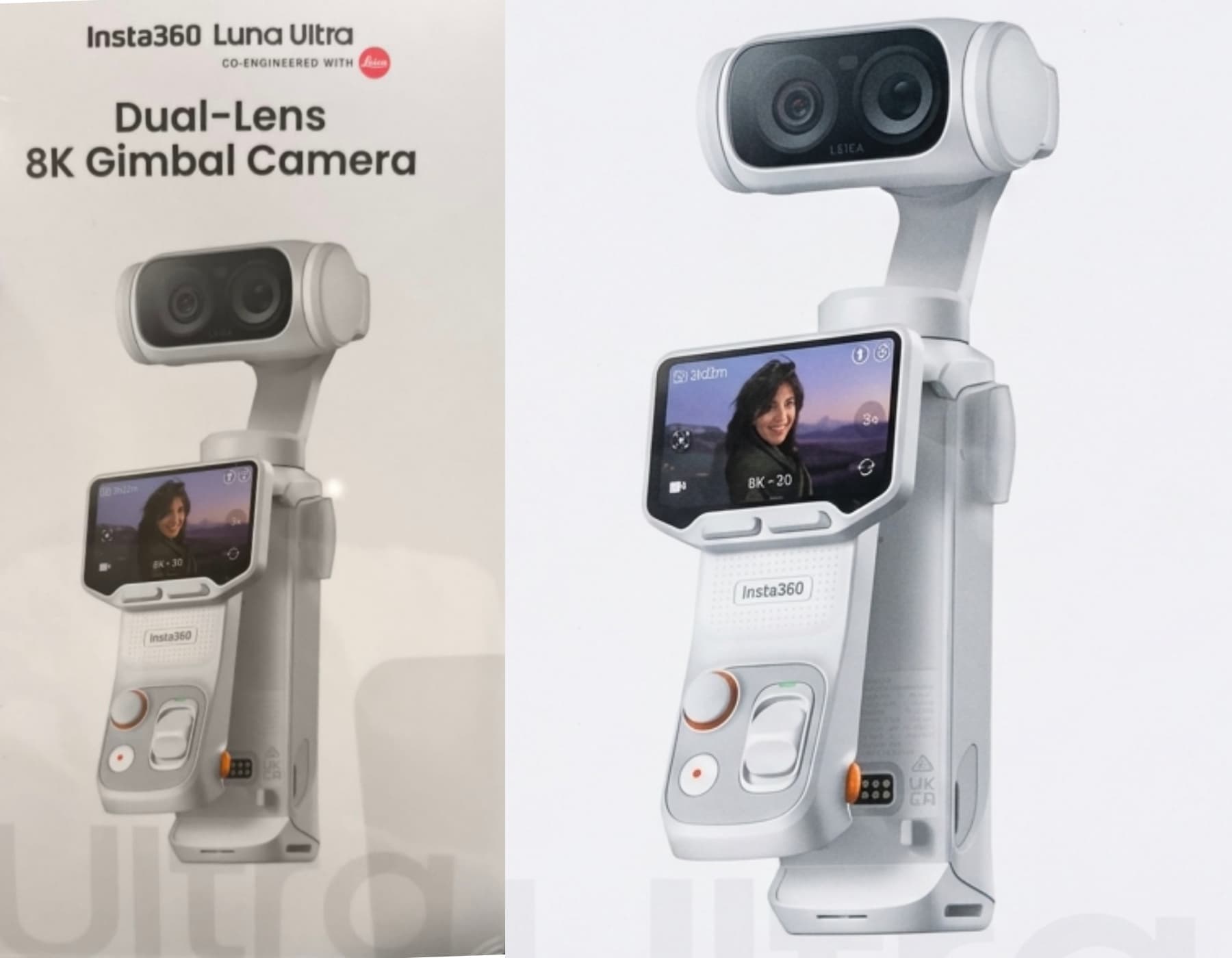
That sounds abstract until you look at the hardware Insta360 has been shipping around Luna and Luna Ultra. The company says Luna Ultra was unveiled at Leica’s headquarters in Wetzlar, co-engineered with Leica, and built around a detachable 2-inch OLED touchscreen plus AI-powered tracking. This is not just a philosophy deck dressed up as product talk. It is a real attempt to turn a camera into something closer to a quiet operator than a device that keeps pulling your eyes back to the monitor.
A founder who thinks like a systems designer
Liu Jingkang, better known as JK Liu, studied computer science at Nanjing University, founded Insta360 in 2015, and was named to Forbes’ 30 Under 30 Asia list in 2017. That background matters because his thinking keeps landing on systems, automation, and user flow rather than the old camera-company habit of celebrating manual control for its own sake.
Insta360 says it was founded in 2015 with the goal of helping people share immersive experiences, and it now describes itself as the world’s leading 360 camera brand. The company also says it won its first Technology & Engineering Emmy Award in 2025 for 360 camera technology and software, specifically for panoramic stitching algorithms and the workflow that made immersive capture and live streaming easier. That is the core of Liu’s worldview in company form: software is not a bolt-on, it is the thing that makes the camera usable.
Why the screen matters as much as the lens
The most revealing detail in the Luna Ultra story is not the Leica badge. It is the detachable touchscreen. DC.Watch says adding that screen pushed the project back by about six months, and that choice tells you where Insta360’s priorities sit. The company did not simply race to ship a pocket camera clone; it delayed the product to preserve a distinct user experience.
That delay makes more sense when you look at the rest of the development history. PetaPixel says the Luna series took about five years to develop, while DC.Watch adds that the Luna Ultra project began with an initial investment of about 30 million yuan. Those numbers point to a long, expensive attempt to build a new kind of capture device rather than another incremental refresh. For hobby photographers, that usually means one thing: a category shift is being financed, not just a spec bump.
The detachable display-controller is also the clearest sign that Insta360 understands the real pain point. A fixed screen forces you into operator mode. A removable one gives you room to keep the camera working while you look elsewhere, move naturally, or hand the device off. That is a small mechanical change with a big behavioral effect.
The street-performance moment that changed the brief
Liu’s thinking sharpened after a very specific experience. He took a Luna Ultra on a trip, started recording a street performance, and found himself staring at the monitor instead of watching the performance. That is the exact kind of problem that matters to people who actually carry cameras, not just admire them in product photos. A camera can be technically powerful and still ruin the moment if it makes you babysit it.
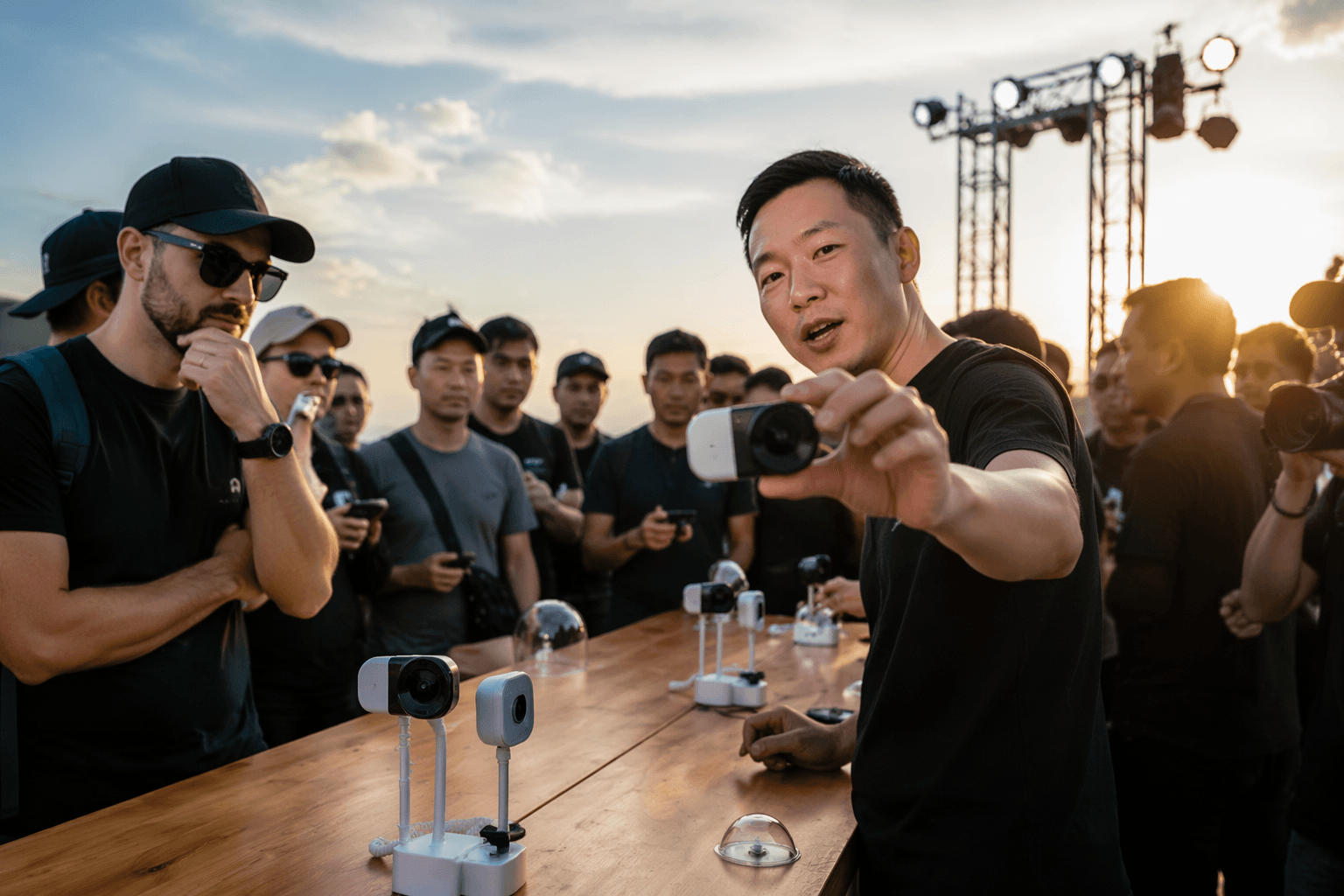
That is why Liu keeps returning to hands-free concepts like POV Tracker, which let the camera follow head movement so the user can stay focused on what is happening. The larger idea is a camera that behaves more like an intelligent cameraman: it sees what matters, tracks action on its own, and keeps filming without demanding constant intervention. For creators who shoot events, action, travel, or casual street footage, that can feel less like automation for its own sake and more like the difference between documenting a scene and missing it while you dial settings.
What Luna Ultra says about the next few years of gear
This is where the Luna Ultra launch becomes more than a one-off product story. Earlier reporting framed Luna as a direct challenge to DJI’s Osmo Pocket line, a category DJI has dominated for years, and said it was originally slated for the first half of 2026. In other words, Insta360 is not just building a camera with a clever trick. It is trying to redefine what a pocketable creator camera should do.
The product details point toward a broader shift that hobbyists will feel across the next few years:
- Less friction in capture, with AI tracking doing more of the framing and following.
- More modular control, with detachable screens or controllers replacing fixed interfaces.
- More emphasis on software-assisted shooting, the same area where Insta360 has already built credibility through stitching and immersive capture.
- More hybrid products that sit somewhere between camera, stabilizer, and autonomous filming tool.
That future will not please everyone. The cleaner the automation gets, the easier it becomes to drift from making choices to simply accepting what the camera decides. But the upside is real too: if the camera can track, stabilize, and stay out of your face, you spend more attention on timing, composition, and being present with the subject. That is a better deal than another overbuilt interface that forces you to stare at a screen when you should be looking at the world.
Liu’s point is not that cameras should vanish because hardware no longer matters. It is that the best imaging gear may be the kind that works hard enough to disappear from your conscious attention. Luna Ultra is the clearest proof yet that Insta360 is serious about building that kind of camera, and serious enough to spend five years, 30 million yuan, and a Leica partnership to get there.
This article was produced by Prism’s automated news system from verified source data, official records, and press releases, then run through automated quality and moderation checks before publishing. The system is built and supervised by the people who set the standards it runs under. Read our full AI policy.
Did this article answer your question?