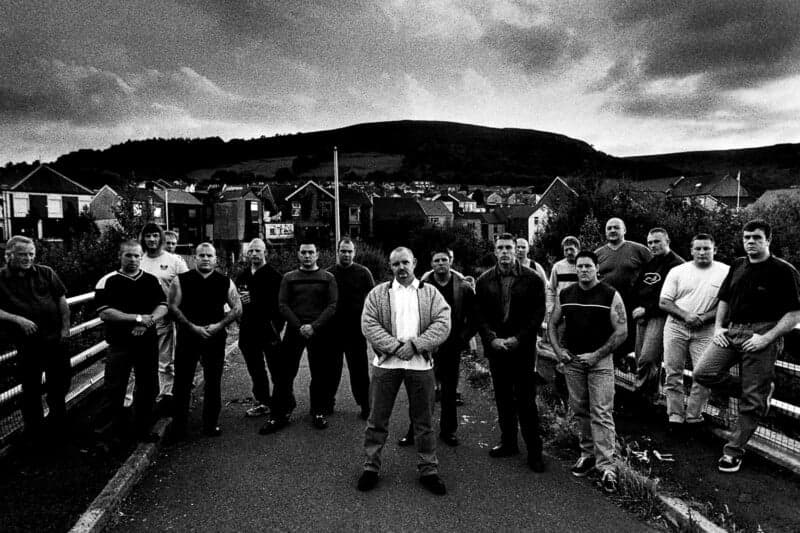
Jocelyn Bain Hogg’s unposed British underworld pictures are set to go on view at Leica Gallery London, with vintage prints drawn directly from his yellow-and-black Kodak archive boxes. The exhibition runs from July 11 to September 3, 2026, at 64-66 Duke Street in Mayfair, and Leica says many of the prints have not been seen for decades.
The pictures grew out of a 1997 assignment from Elle, when Bain Hogg was asked to document a journalist meeting two local villains. That job expanded into The Firm, the book that followed the hidden social network around the British criminal underworld for about three years. Bain Hogg, who studied Documentary Photography at Newport Art College and began his career as a unit photographer on film sets, has said he did not know the criminal world and did not try to fake that knowledge. He kept the relationship direct, made clear that he did not want posed photographs or complicity, and showed the images as he worked so there would be no confusion about intent.
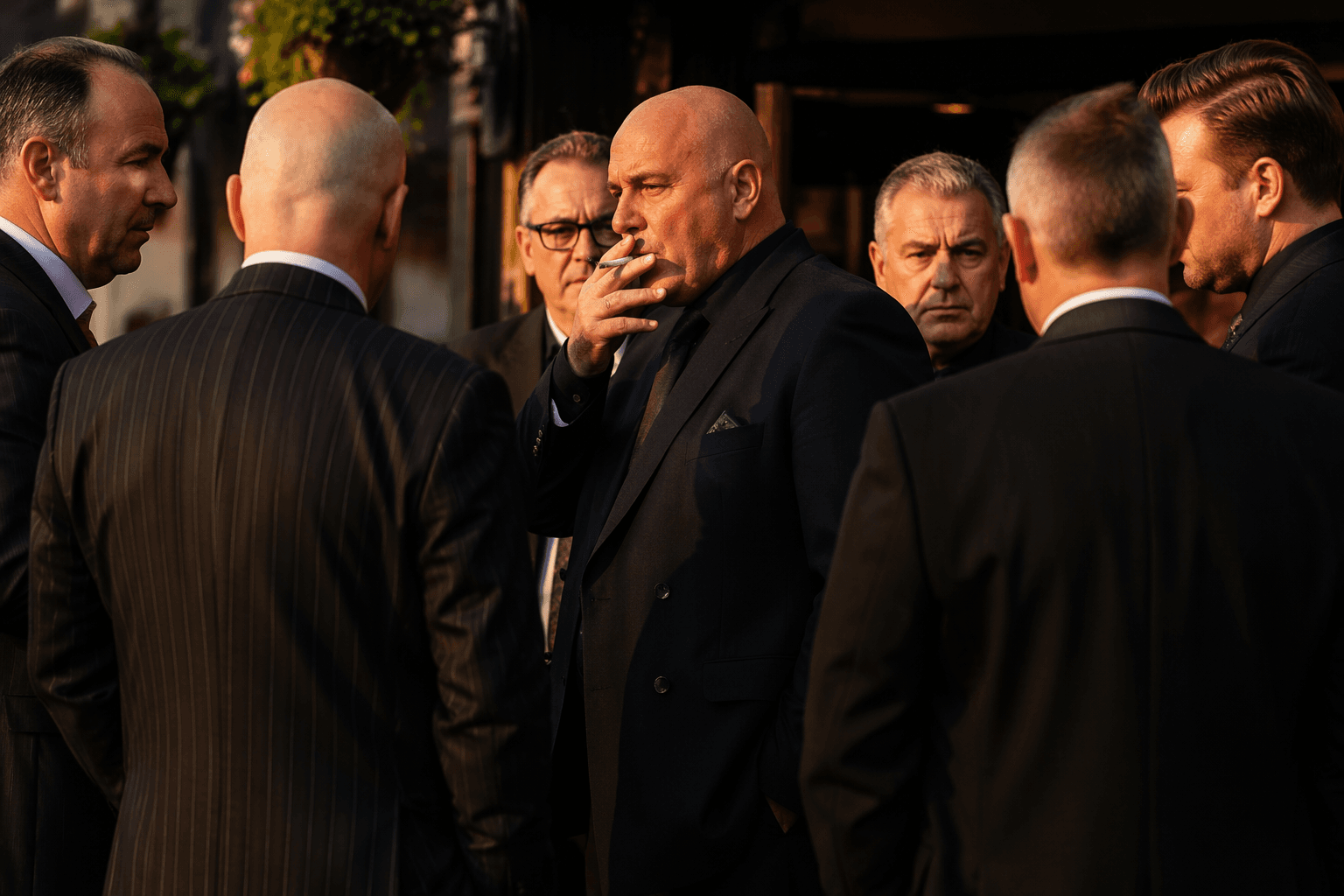
That method mattered because the people in front of his lens were part of a world built on secrecy, intimidation and performance. Leica says Bain Hogg spent 10 years of his life living with some of London’s most notorious gangsters, while The VII Foundation describes The Firm as a four-year photographic document that moved from exile in Tenerife to wider activity across the United Kingdom. The book was published in 2001 and won the 2003 Lead Award for portraiture, putting it in the long arc of British documentary work rather than a one-off crime picture package.
The cast associated with the project includes Joey Pyle, identified as a major London gangland boss and a key underworld figure, along with Freddie Foreman, Tony Lambrianou, Roy ‘Pretty Boy’ Shaw, Bruce Reynolds and Reggie Kray. FOTO8 has described the book as a portrait of a thriving London underworld dominated by figures who made their names in the 1960s and 70s, and one retrospective account notes that Kray’s funeral closes the book. Leica says the exhibition also surveys Bain Hogg’s career from 1985 to 2011, giving the gallery walls a wider frame than the gangster series alone.

The physical presentation is part of the point. Pulling the prints from archive boxes, with stamps, signatures and handwritten notes still attached to the material history, turns The Firm into more than a crime archive. It shows how access, patience and a fixed visual stance can turn a commission into a body of work that still holds weight when the contact sheets, original prints and storage boxes survive the decades.
Every story on Photography News is assembled by an automated editorial system that works from verified research, official records, and credible reporting, then clears automated accuracy and moderation checks before it goes live. The standards that system follows are set and overseen by the people who run the publication. Read our full editorial policy.
Did this article answer your question?