Johanna Alarcón wins photo award for Amazon midwifery project
Johanna Alarcón’s winning series puts Indigenous midwives, apprentices and patients at the center of Amazon healthcare, turning birth into a record of cultural continuity.
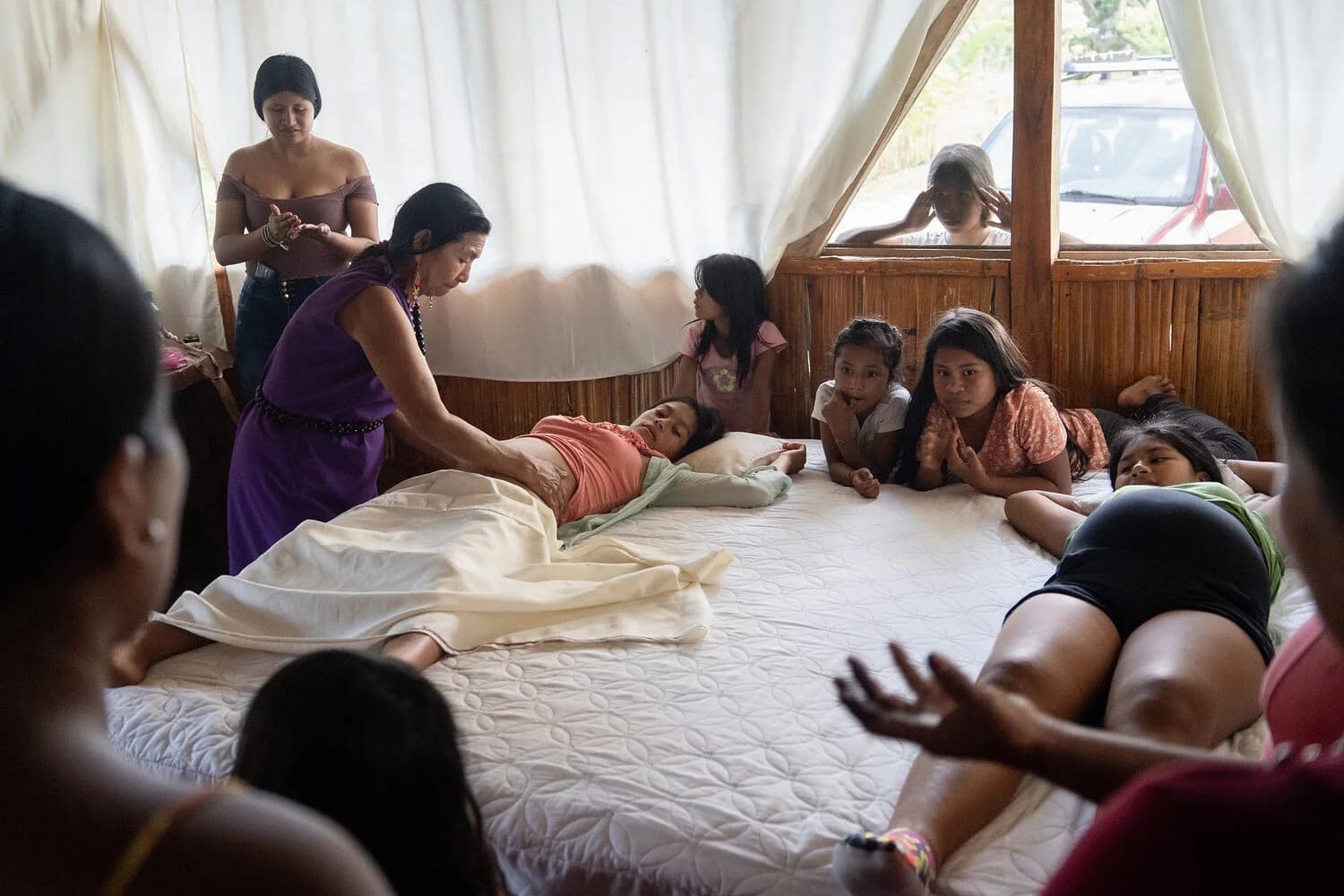
Johanna Alarcón won the Marilyn Stafford FotoReportage Award 2026 for When the Earth Gives Birth, a documentary series built around Indigenous midwifery in the Ecuadorian Amazon and Andes. The project follows the AMUPAKIN and Partera de Anaku schools and hospitals, where women-led healthcare has been providing obstetric care for more than 30 years.
What gives the work its weight is not just the subject, but the point of view. Alarcón’s photographs are told through midwives, apprentices and patients, which keeps the series close to lived experience instead of turning it into a distant report on maternal health. That structure lets the women in the images define the terms of the story, showing birth care as something practiced, taught and carried forward inside the community.
The setting matters as much as the people. The Ecuadorian Amazon and Andes are places where Indigenous women face disproportionately high maternal mortality rates, and Alarcón’s project makes that reality visible without reducing the community to a statistic. By focusing on the midwifery schools and hospitals themselves, the series shows an existing model of care that has endured for decades and remains rooted in local knowledge.
The title, When the Earth Gives Birth, points to the project’s larger frame, one that links healthcare with collective memory, spirituality and the relationship between community and territory. In that sense, the photographs do more than document a service gap. They preserve a visual record of Indigenous self-determination, and they do it through the kind of sustained access and patience that long-form photojournalism still demands.
The award gives the series a wider platform, but the deeper value is already in the pictures themselves. Alarcón has made a work that treats birth not as a private clinical moment, but as part of a living cultural continuum, and that is exactly where documentary photography still earns its place.
This article was produced by Prism’s automated news system from verified source data, official records, and press releases, then run through automated quality and moderation checks before publishing. The system is built and supervised by the people who set the standards it runs under. Read our full AI policy.
Did this article answer your question?