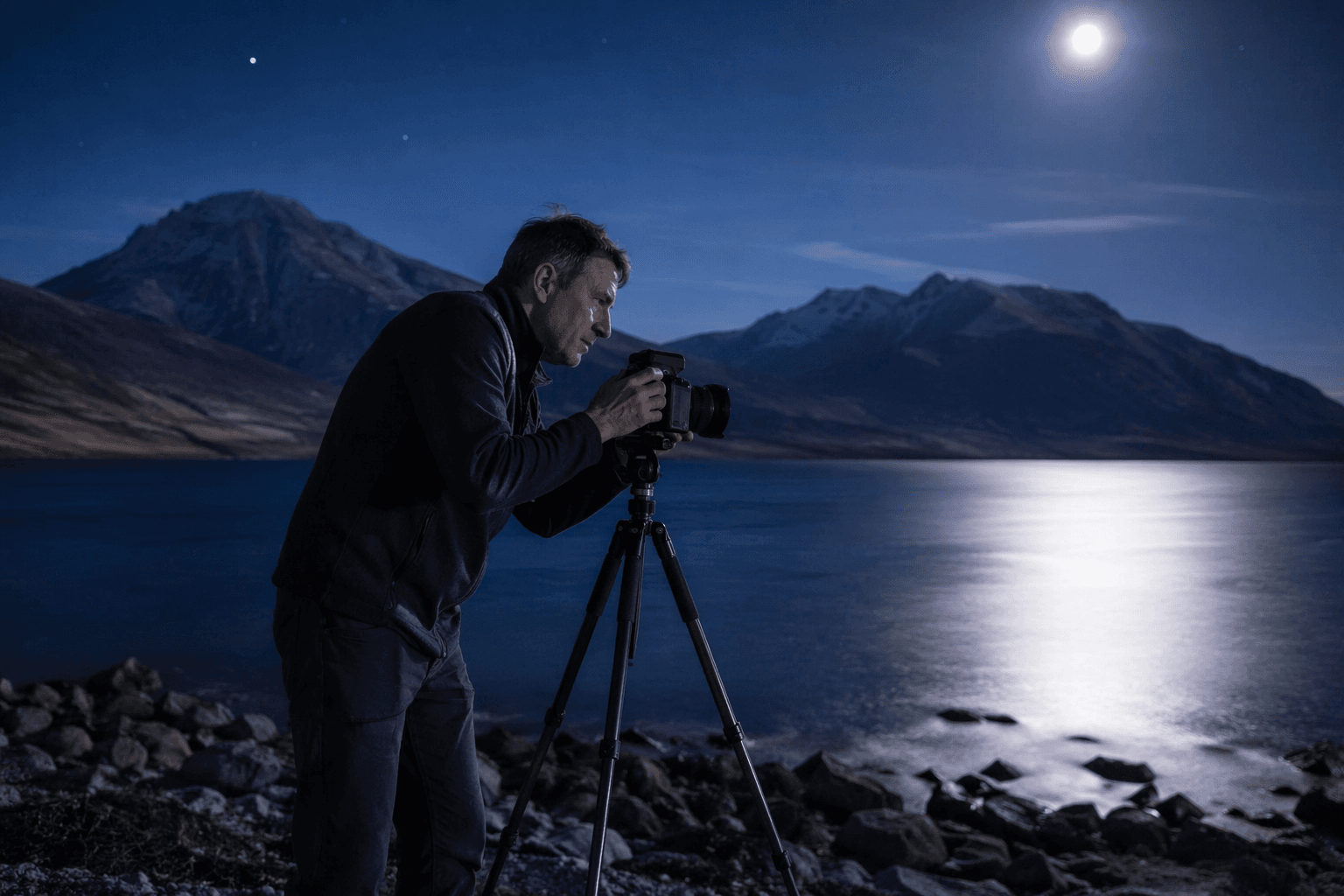
Nikon Z9 on Artemis II helps reveal solar corona during lunar flyby
A last-minute Nikon Z9 on Artemis II captured a nearly hour-long lunar eclipse view, and Tokyo City University turned the JPEG into coronal science.
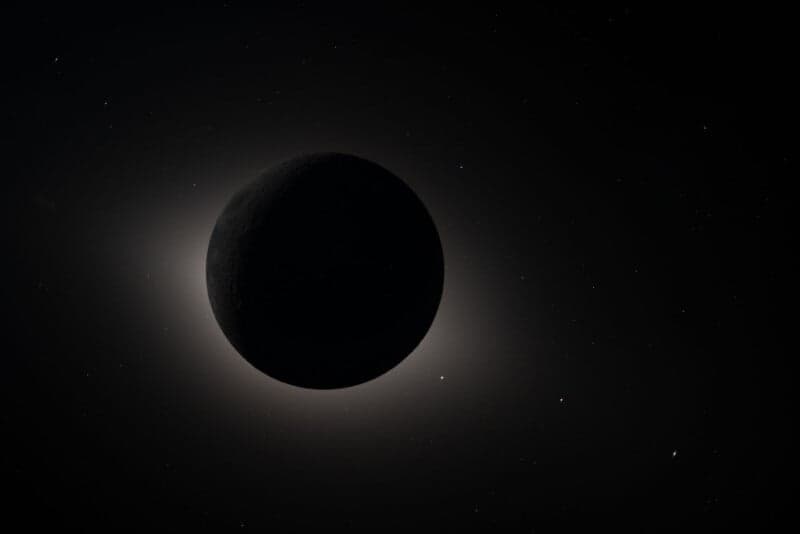
A publicly released Nikon Z9 image from Artemis II let Tokyo City University researchers extract quantitative data from the solar corona. A paper published June 9, 2026 in The Astrophysical Journal Letters found that a rendered RGB JPEG from the flight could still support real measurement when the team corrected for gamma and checked the instrument response against background stars.
The observation came from an unusually long eclipse geometry during Artemis II’s seven-hour lunar flyby on April 6, 2026. Because the spacecraft came within about 4,067 miles of the Moon at closest approach, the Sun stayed hidden behind the lunar disk for nearly an hour, far longer than a total eclipse seen from Earth. That extended occultation gave Kohji Tsumura of Tokyo City University and Ko Arimatsu, who is affiliated with the National Astronomical Observatory of Japan and Ishigakijima Astronomical Observatory, a rare look at the F-corona, the inner zodiacal light that is normally washed out by daylight on Earth.

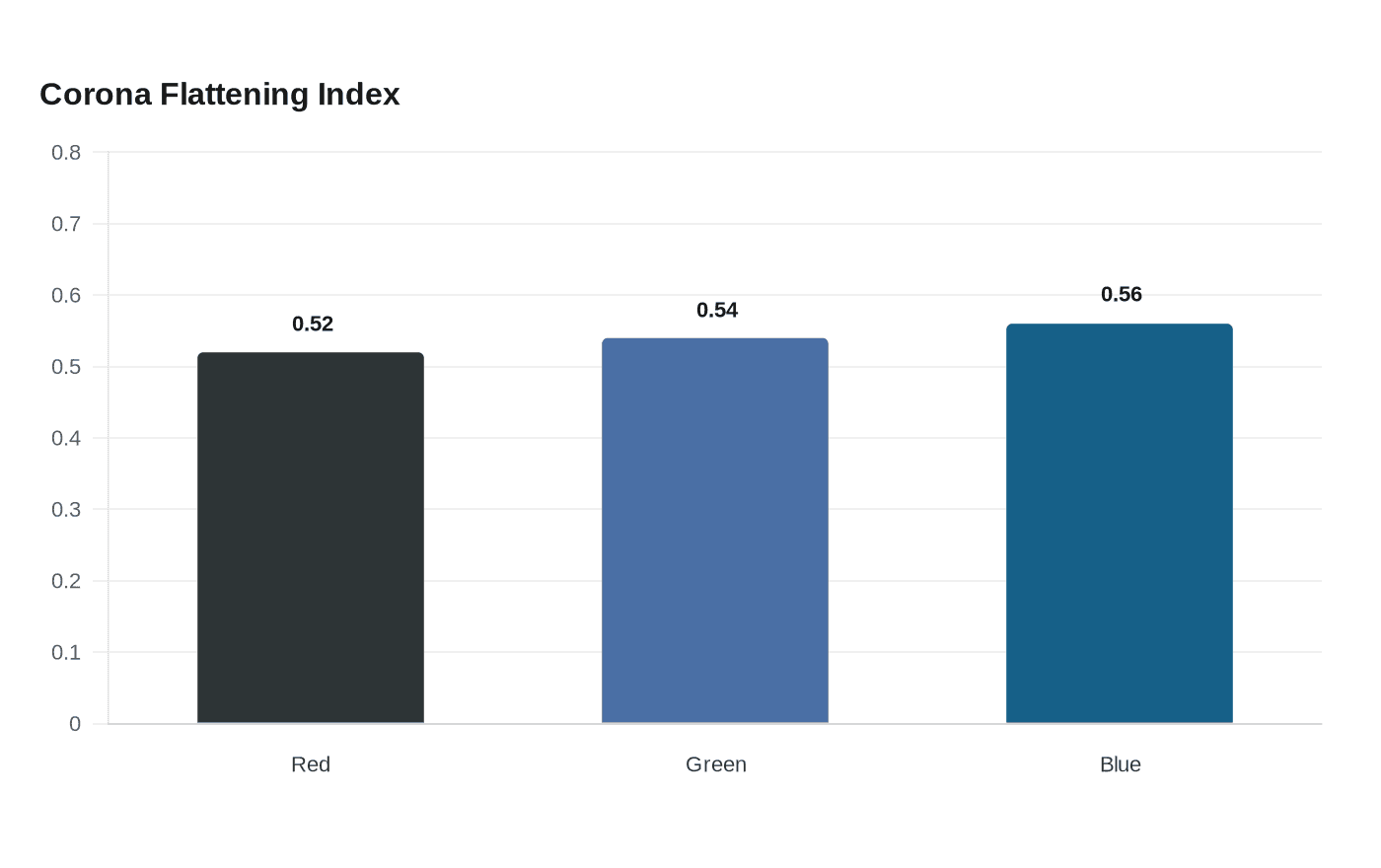
The camera file itself was not a laboratory-grade calibration frame. The image was a rendered RGB JPEG without full photometric calibration, but the gamma correction inherent to the format was explicitly accounted for, and field stars validated the measurements. In the unsaturated regime, the response was linear enough for the authors to estimate the corona’s shape, finding flattening indices of 0.52, 0.54, and 0.56 in the red, green, and blue channels. Their comparison with the ZodiSURF zodiacal light model pointed to a dust number-density power-law index of about 1.3.
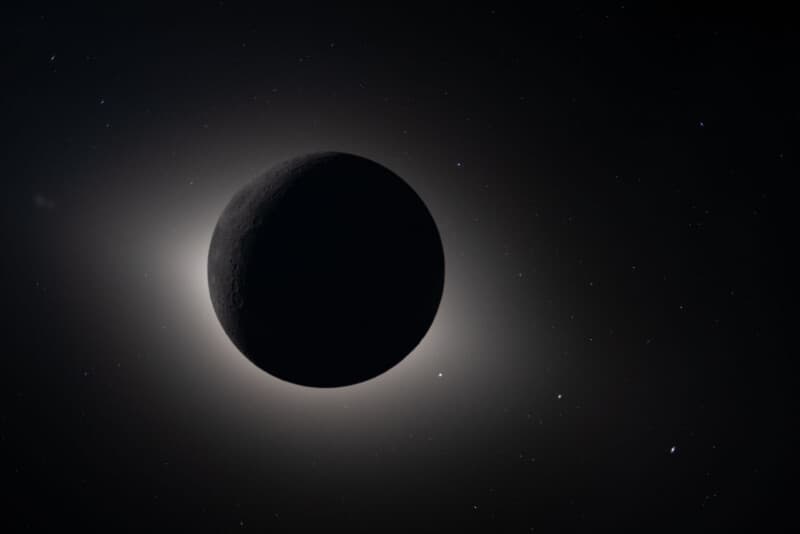
NASA described the image haul from the flyby as a trove of scientific data. The agency said the crew documented impact craters, ancient lava flows, surface fractures, earthset, earthrise, six meteoroid impact flashes, and solar-eclipse views of the Sun’s corona. Dr. Nicky Fox called the images “exquisite and brimming with science,” while Jacob Bleacher said it was remarkable to hear the crew describe the views. The Artemis II collection will offer converted lossy JPEGs by default, with original Nikon Raw NEF files available by request and a peer-reviewed archive planned through the NASA Planetary Data System.
Nikon announced a Space Act agreement with NASA in March 2024 for Artemis camera development, with the Z 9 slated for Artemis III, and the Z9 was added to Artemis II at the last minute after crew requests. Launched from Kennedy Space Center’s Launch Pad 39B at 6:35 p.m. EDT on April 1, 2026, with Reid Wiseman, Victor Glover, Christina Koch, and Jeremy Hansen aboard, Artemis II gave a flagship stills camera a cold, motion-heavy test under extreme contrast.
This article was produced by Prism’s automated news system from verified source data, official records, and press releases, then run through automated quality and moderation checks before publishing. The system is built and supervised by the people who set the standards it runs under. Read our full AI policy.
Did this article answer your question?