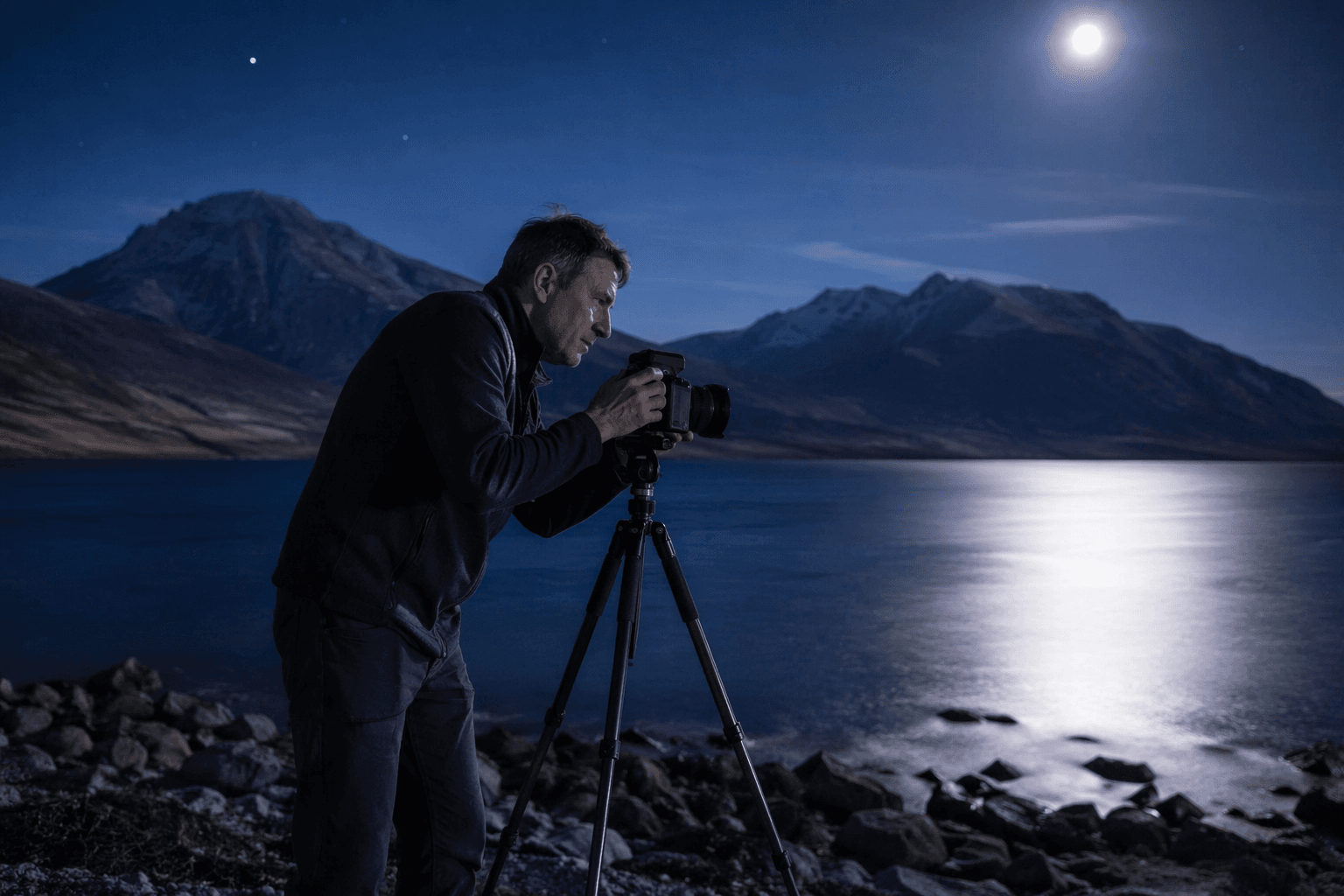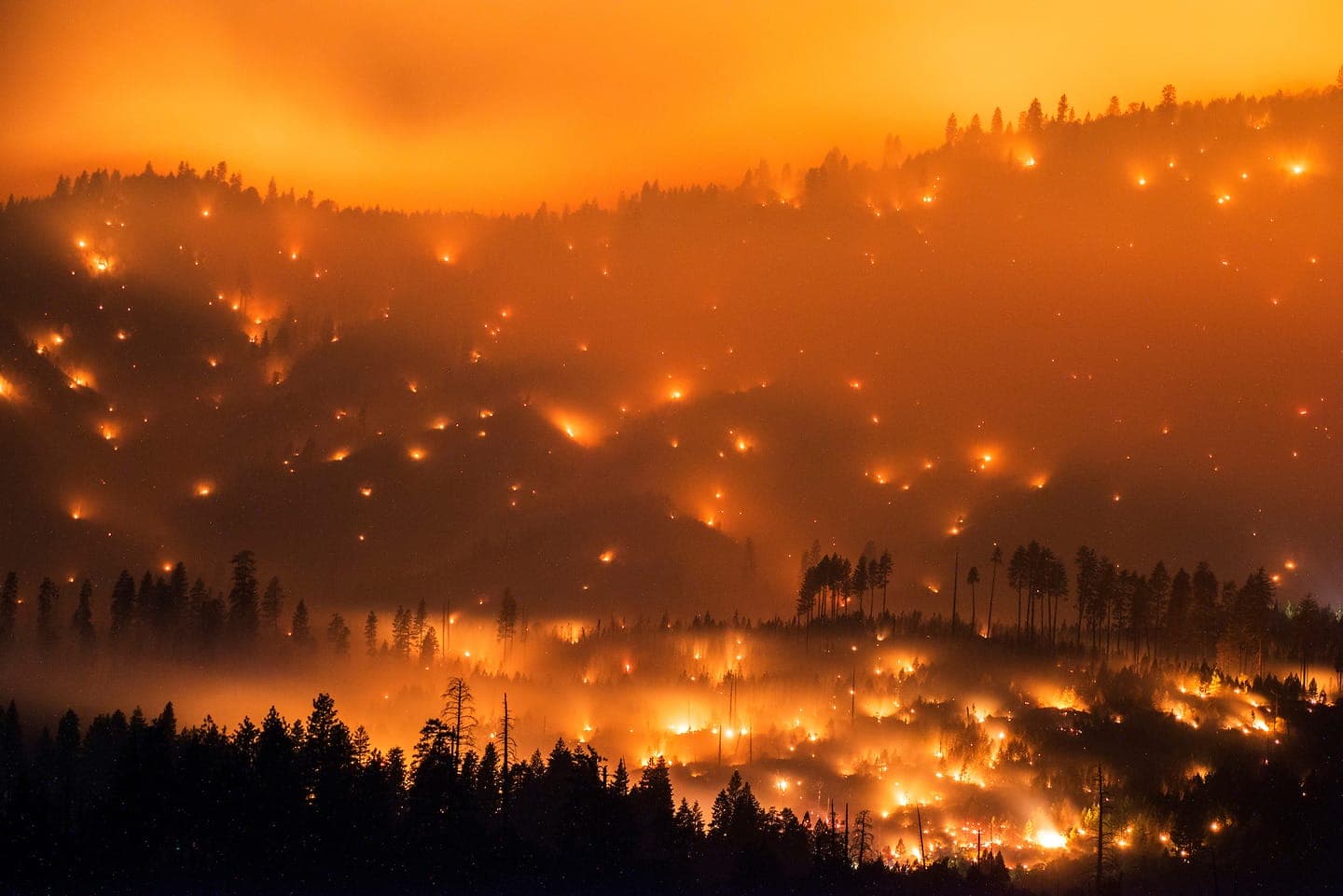
Stuart Palley photographs California wildfires at night, letting the flames become the light source in Terra Flamma. He uses long exposure to pull out color and shape from smoke, terrain, and heat. The result is beautiful, but the work is also a field manual for shooting a dangerous subject without pretending danger is the point.
Night as a working method
After dark, the landscape takes on warm orange and red illumination, while smoke and terrain push in blue, purple, and shadow. Palley has pointed to Vincent van Gogh’s idea that night can feel more alive and more richly colored than day, and that is exactly what Terra Flamma looks like when the exposure is held long enough for the fire to write across the frame.
That is not a gimmick. The images made with a Fujifilm GFX100 II and a Nikon Z8 make clear that this is technically demanding work, not a conceptual exercise dressed up with a dramatic subject. Long exposure in wildfire country has to hold detail while flame shifts, wind changes the smoke, and the entire scene keeps rewriting itself.
A project built across seasons, not single moments
Palley began photographing California wildfires in 2013 and has covered nearly 200 fires over 13 years. Terra Flamma is not a collection of isolated hero frames. It is a record of a problem getting longer, hotter, and more aggressive, with each season pushing farther beyond the old boundaries of summer.
The project’s roots go back even earlier. Palley started photographing wildfires in summer 2012, when he was an intern at the Orange County Register, and he later expanded the project with the Terra Flamma website in July 2018. That site was built to do more than publish stills. Palley wanted room for writing, interactive maps, videos, and analysis.
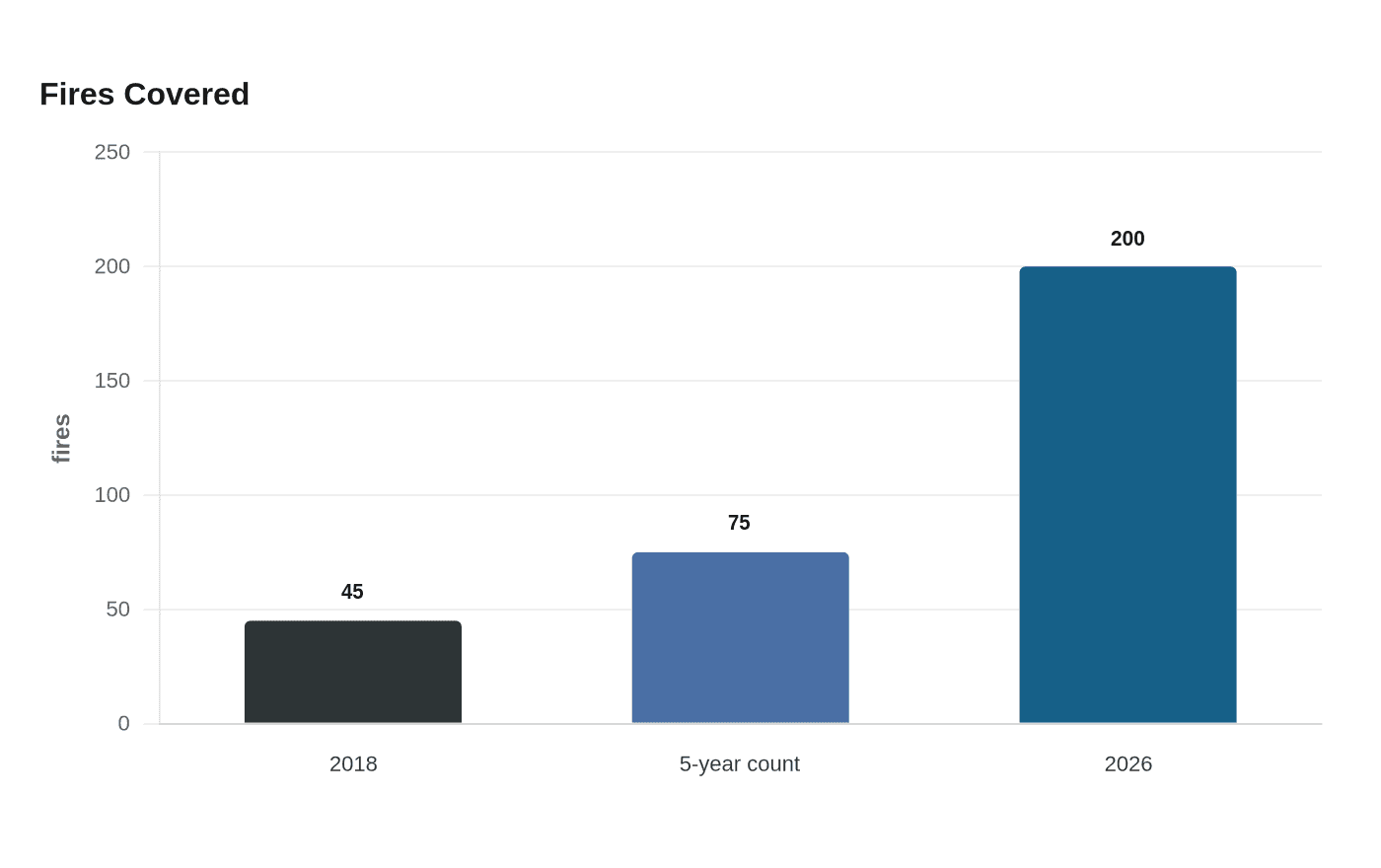
In 2018, Terra Flamma stood at 45 major fires. An NRDC profile later gave the five-year count as nearly 75 fires. By 2026, that number had climbed to nearly 200.
The ethics are baked into the assignment
Terra Flamma, roughly earth on fire, is meant to document wildfires differently, raise awareness about emergency preparedness, and honor wildland firefighters and support crews. The images can easily make fire look cinematic while hiding the labor that makes the picture possible. Palley works with the U.S. Forest Service under a call-when-needed contract, so he is not just chasing spectacle. He is often inside the same incident structure that is managing the emergency.
The work of the crews he photographs is brutally physical. Hotshot crews and handcrews build fireline with chainsaws and hand tools, and operational tempo is crucial in wildland fire operations. That is the part most photographs leave out: the pace, the fatigue, and the fact that time shapes the tactics.
Palley is still making pictures with aesthetic control, but he is also documenting a public hazard and the people who confront it. The site’s emphasis on emergency preparedness is part of the project.
Why the archive matters now
In 2025, UCLA found that human-caused climate change advanced California’s wildfire season by six to 46 days between 1992 and 2020. That kind of shift helps explain why fire is no longer something that politely waits for summer. It is drifting into the rest of the calendar.
The January 2025 Greater Los Angeles wildfires brought that point into brutal focus. The fires burned more than 40,000 acres, destroyed more than 12,300 structures, and prompted evacuation orders and warnings for as many as 200,000 residents. The Palisades Fire burned nearly 24,000 acres, while the Eaton Fire burned more than 14,000 acres. The U.S. Environmental Protection Agency was then tasked with removing hazardous materials from nearly 14,000 affected properties after the January 7 disaster.
Palley has said that January 2025 brought an inferno to the hills of Los Angeles at a time of year that used to feel safe. Wildfire reached Pacific Palisades, Malibu, Altadena, and the Greater Los Angeles area in midwinter.
What this kind of shooting actually demands
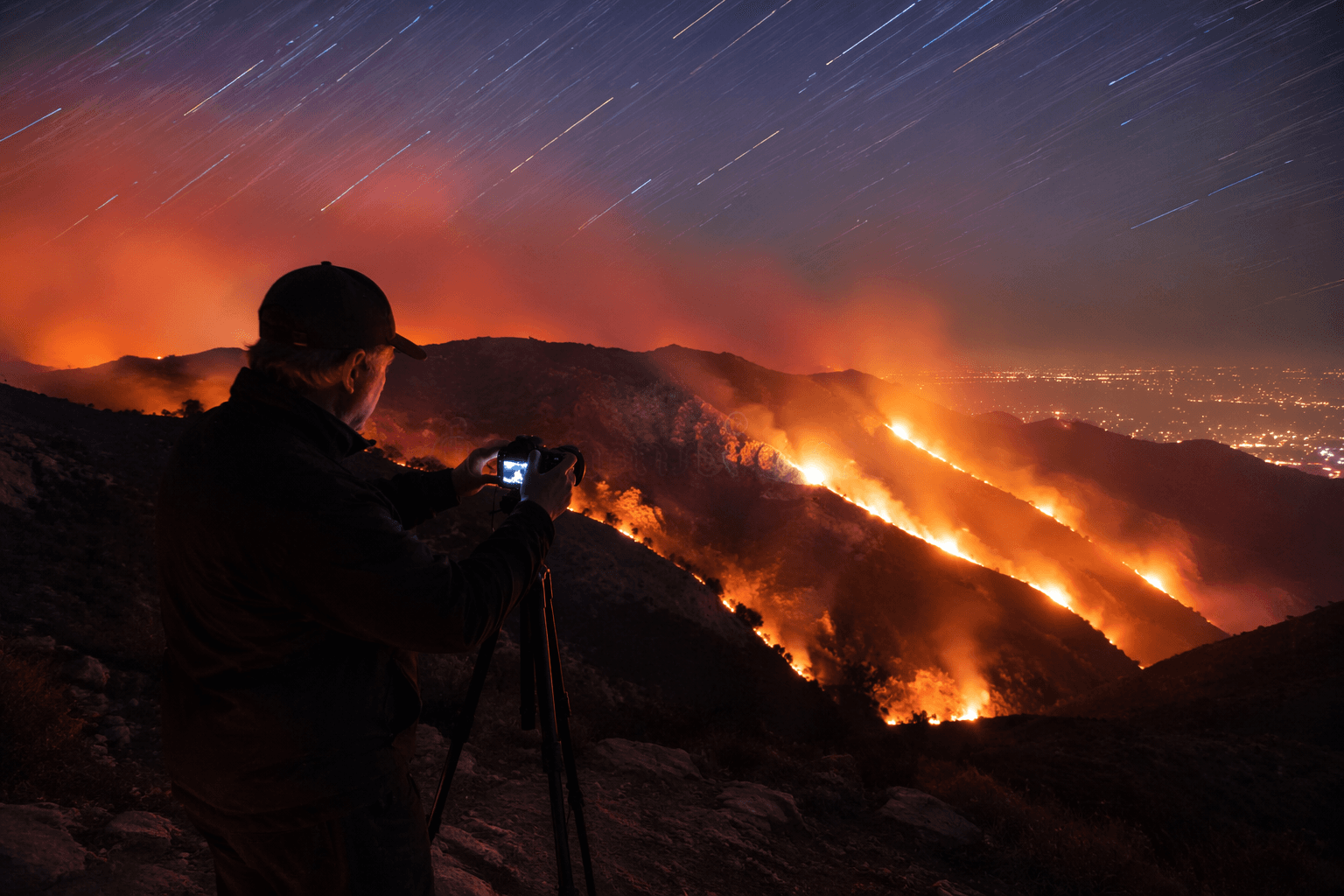
Extreme-condition image-making here is not about luck. It is about staying with one subject long enough to understand its rhythm, then building a repeatable language around that rhythm. Palley’s years of coverage, from the Santa Ana Mountains to the wider American West, show how a photographer can use timing, duration, and color to reveal patterns that would vanish in a single split-second frame.
A few practical lessons stand out from the work:
- Long exposure is not just a stylistic choice here. It is the mechanism that lets the fire become the light source.
- Night shooting changes the palette. Smoke, terrain, and darkness are part of the composition, not obstacles to it.
- A project gains authority when it expands beyond stills. Writing, maps, video, and analysis turn a body of images into a usable archive.
- Access and responsibility belong together. Palley’s work with the U.S. Forest Service and his focus on preparedness tie the project to wildfire operations and public safety.
Every story on Photography News is assembled by an automated editorial system that works from verified research, official records, and credible reporting, then clears automated accuracy and moderation checks before it goes live. The standards that system follows are set and overseen by the people who run the publication. Read our full editorial policy.
Did this article answer your question?