Thomas Windisch captures haunting images of abandoned hospitals and asylums
Thomas Windisch’s Medical series turns abandoned hospitals into tense, atmospheric frames, where history, access limits, and careful composition do the real work.
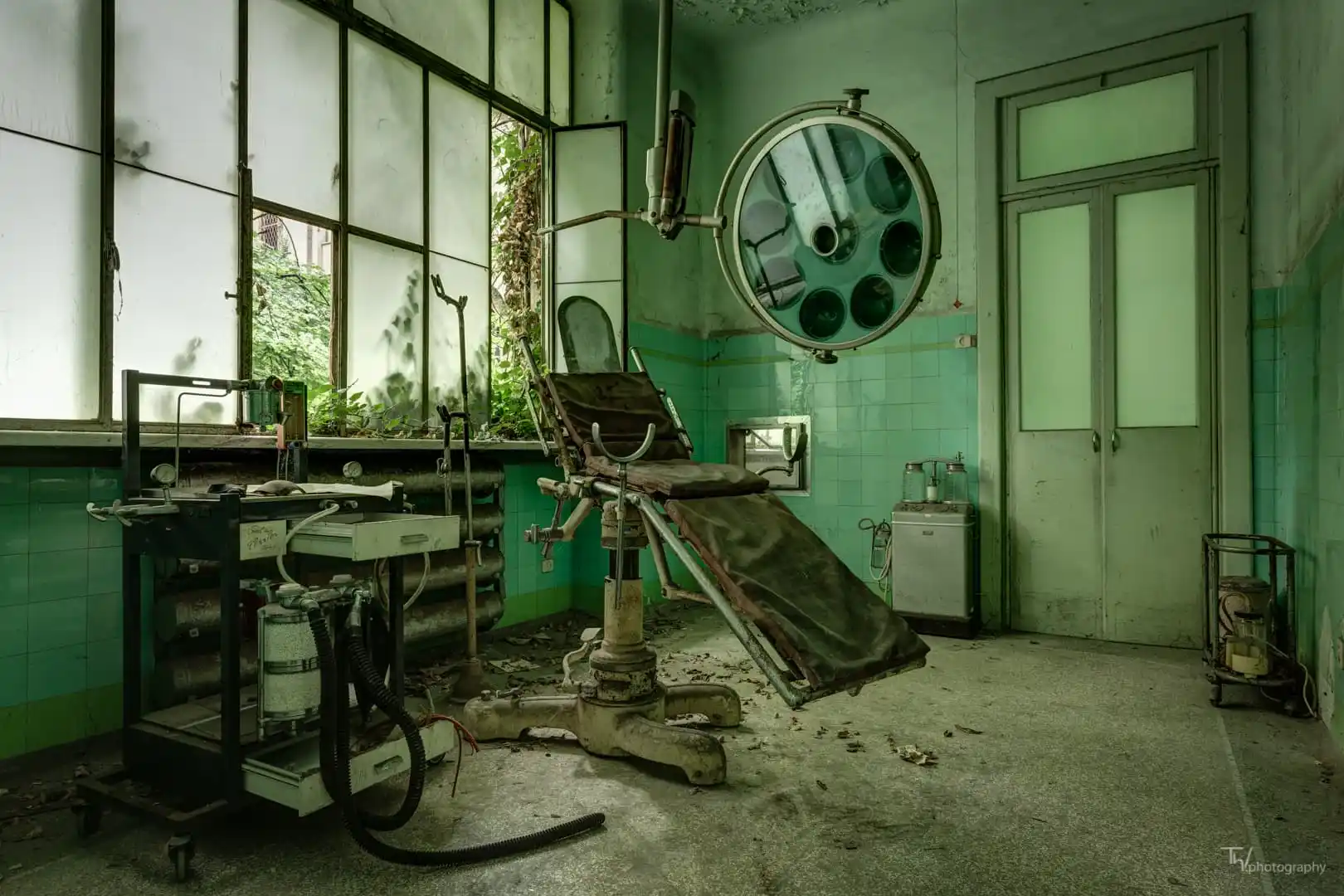
Broken light, wide interiors, and surfaces already collapsing into texture shape Thomas Windisch’s abandoned hospitals into frames that feel earned instead of staged. His Medical series treats those places as more than ruin backdrops, using architecture and human trace to build images that are unsettling, precise, and alive with memory.
A camera built for the road and the ruin
Thomas Windisch’s Medical series follows him through abandoned hospitals and asylums across Europe. Urban-exploration photography lives and dies on readiness: you are often moving fast, improvising, and responding to whatever a room gives you in a few minutes. Windisch’s work makes clear that the subject is not just decay, but the act of entering places that have been left to dust and neglect and still finding a frame with discipline.
The photographs resist the cheap thrill of trespass. Atmosphere is built through restraint, careful framing, and patience with what the building already contains. The tension comes from the collision of real architecture, real history, and real abandonment, not from making the scene look more haunted than it already is.
Why abandoned hospitals are such difficult subjects
Hospitals and asylums are especially demanding spaces to photograph because they rarely offer one clean visual language. You get mixed light pouring through broken windows, dark corridors that swallow detail, peeled paint, rust, tile, signage, and the sudden openness of large ward rooms that can feel empty unless the composition has a clear anchor. Windisch’s subject matter shows why these places reward photographers who can balance scale with detail instead of chasing only the most dramatic corner.
They are also emotionally loaded spaces. A crumbling school or factory can feel abandoned; a psychiatric institution or hospital feels abandoned and remembered at the same time. The best frames let the room speak for itself rather than forcing the image toward horror or spectacle.
The history under the peeling paint
The pull of these buildings comes from the history they carry. WHO defines deinstitutionalization as shifting mental health care and support from long-stay psychiatric institutions to community-based services, and long-stay institutions have often been marked by poor treatment, segregation, poor living conditions, lack of resources, overcrowding, and human-rights violations. When a photographer points a lens at an abandoned asylum, the image sits inside that larger story whether the frame acknowledges it or not.
Bethlem Royal Hospital, founded in 1247 in Bishopsgate, was the first asylum for the mentally ill in England, and the word bedlam later became shorthand for psychiatric hospitals and even for chaos itself. At Hanwell Asylum, Dr John Conolly helped push psychiatric care toward a more humane model.
Northampton State Hospital in Massachusetts began as the Lunatic Hospital at Northampton in 1855, while Bloomingdale Asylum in White Plains, New York, was planned on a 300-acre site with six pavilions in a park-like design by Frederick Law Olmsted. About 276,000 patients were admitted to Ellis Island Hospital between 1892 and 1951. These places were built around reform, order, and treatment.
What to learn from the way Windisch sees
Abandoned-place photography works best when the photographer treats the building as evidence, not scenery. That means paying attention to ward layouts, bed frames, filing cabinets, peeling labels, radiators, and all the ordinary objects that prove people once moved through the room. It also means allowing wide interiors to breathe, showing how small a human figure feels against architecture that was designed to contain many lives at once.
A practical approach helps:
- Make the frame about structure first, then decay. Long corridors, doorways, beds, and window lines give the image a spine.
- Use mixed light carefully. Let shadows keep the mood, but do not lose the room’s geometry.
- Photograph traces of use, not just damage. Medical furniture, signage, and archival scraps turn atmosphere into story.
- Keep the composition restrained. The more loaded the location, the less the image needs theatrical treatment.
Access, risk, and why restraint matters
This kind of work also comes with real limits. Abandoned hospitals and asylums can be unstable, contaminated, or legally off-limits, and no image is worth forcing entry or ignoring safety. The strongest urban-exploration photographs are usually the ones made with permission, caution, and a willingness to leave a space alone when the risk is higher than the picture.
Victorian asylum photography and medical archives documented these institutions through bodies, charts, and patient records, which means the images we make now are never the first visual record of suffering or care inside those walls.
This article was produced by Prism’s automated news system from verified source data, official records, and press releases, then run through automated quality and moderation checks before publishing. The system is built and supervised by the people who set the standards it runs under. Read our full AI policy.
Did this article answer your question?